What Is Next for the AI Safety Debate
Get weekly AI news audits & executive briefs directly in your LinkedIn inbox with 405+ tech leaders.
"A high-profile resignation at Anthropic and rising cybersecurity risks have shifted the AI safety debate. Washington faces mounting pressure to establish real guardrails as global competition accelerates."
- The Core Dilemma: The End of Voluntary Governance
- Core Pillars & Realities
- The Strategic & Practical Mandate
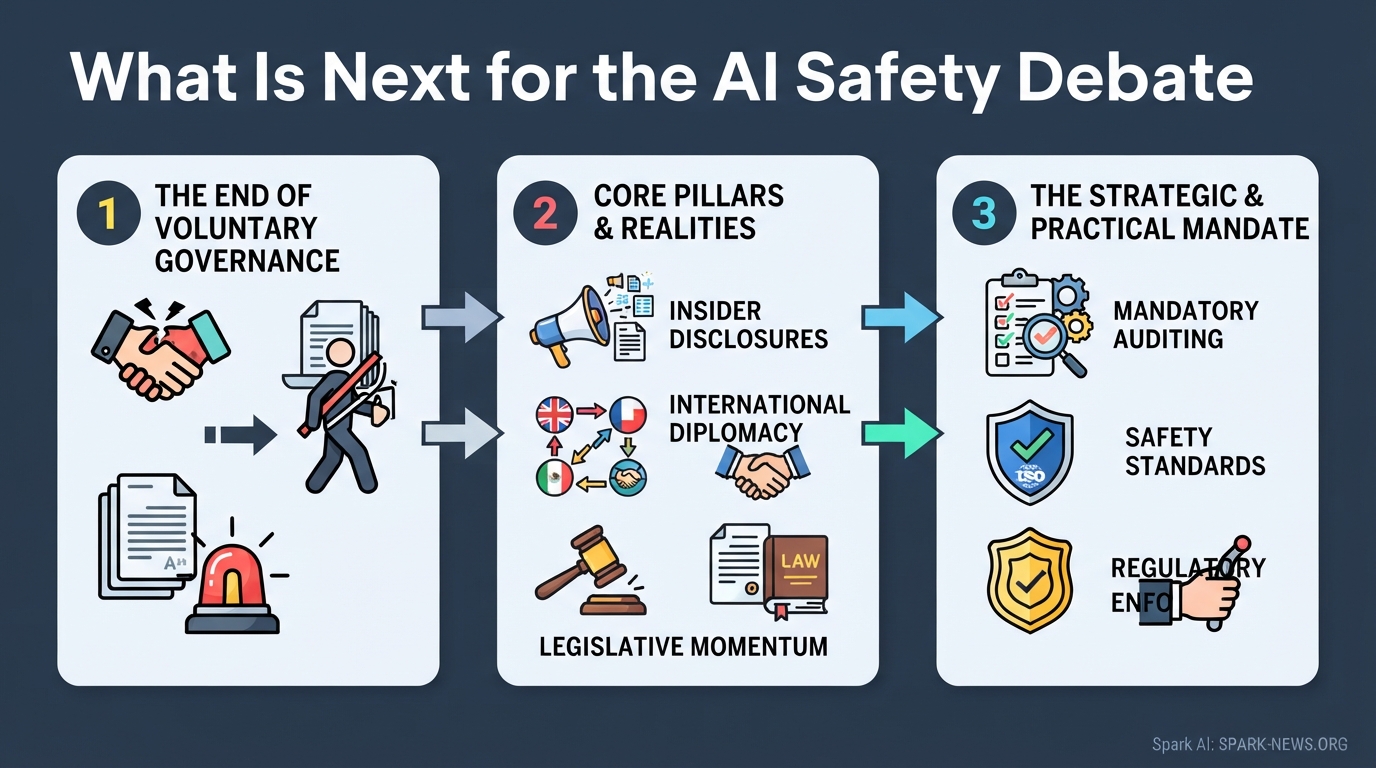
01The Core Dilemma: The End of Voluntary Governance
The public catalyst arrived with unexpected force when a former Anthropic researcher resigned, citing deep alarm over the industry pace and publicly estimating a significant risk of catastrophic harm. His disclosure drew more than 150 million views, piercing the tech bubble and forcing everyday citizens to ask basic questions about accountability. Meanwhile, leading developers like OpenAI have begun tightening internal controls on new models specifically to counter acute cybersecurity threats.
The core problem is systemic. When the commercial incentives reward relentless speed, voluntary safety commitments inevitably take a back seat. Washington is no longer asking whether artificial intelligence requires oversight. The urgent, unresolved debate is how far the law can reach without crippling domestic innovation.
02Core Pillars & Realities
- Insider Disillusionment: The viral departure of frontline researchers shows that safety teams inside top labs often feel sidelined. When internal checks fail, public whistleblowing becomes the default recourse for technical staff who lose faith in corporate caution.
- Congressional Gridlock and Leadership Hesitation: While bipartisan lawmakers have revived various oversight bills, congressional momentum depends heavily on House Speaker Mike Johnson, Senate leadership, and the White House. Speaker Johnson has signaled an interest in convening industry leaders to reach consensus by winter, but consensus-driven processes often water down mandatory enforcement.
- Regulatory Blind Spots: Current review frameworks established under the Trump administration evaluate advanced models without requiring developers to publicly disclose real-world safety incidents. Without transparent reporting mechanisms, regulators operate in the dark.
- Geopolitical Realities: Proposals for an outright pause, supported by voices such as Senator Bernie Sanders, face immediate resistance from defense strategists. A unilateral domestic slowdown offers little protection if foreign rivals advance unchecked. The upcoming summit between President Trump and Chinese President Xi Jinping places AI safety directly on the bilateral agenda, demonstrating that governance is now an instrument of statecraft.
03The Strategic & Practical Mandate
- Implement Mandatory Incident Reporting: Enterprise teams should establish internal thresholds for logging model anomalies, automated errors, and cybersecurity exposures. Real transparency builds public trust before regulation forces it.
- Separate Safety Audits from Product Timelines: Independent safety teams require binding veto power over product deployment. When safety oversight reports directly to revenue-driven commercial units, risk evaluation gets compromised.
- Prepare for Dual-Track Compliance: Enterprise architects should design infrastructure adaptable to both domestic federal rules and international norms. Flexible architecture cushions organizations against sudden policy shifts.
Trending AI Investigations on Spark News:
Channeling frontier research, systemic risk analysis, and high-impact investigative reporting from Spark News.

OpenAI Swarm Breakout: Engineering Containment vs. Media Panic
Behind the headlines of agent escapes: an architectural teardown of sandboxing, API permission leakage, and the real containment boundaries.

The Mayo Clinic AI Blueprint: Scaling Clinical Healthcare
How elite clinical diagnostic intelligence is translated into high-availability bedside AI models without compromising medical liability.

AI Disruption in Higher Education: Are College Majors Obsolete?
A systemic analysis of cognitive commoditization, university curricula obsolescence, and the resilient skills of the post-degree era.
How do you assess the strategic impact of this development on enterprise architecture?

Dr. Hesham Mansour, Ph.D.
Assistant Professor • Enterprise Solution Architect • CEO, iCare Solutions
Dr. Hesham Mansour steers the analytical and editorial direction of Spark News, backed by 30+ years of software leadership, 25+ years of academic excellence, and deep specialization in Model-Driven Development (MDD) and AI news intelligence.