
Zelda at 40: How Nintendo Is Anchoring the Switch 2 Era in Timeless IP
Get weekly AI news audits & executive briefs directly in your LinkedIn inbox with 405+ tech leaders.
"Nintendo marks the 40th anniversary of The Legend of Zelda with an Ocarina of Time remake and a limited Switch 2 console, testing ecosystem loyalty and modern supply chains."
- The Core Dilemma: Balancing Heritage, Scarcity, and Hardware Transitions
- Core Pillars & Realities
- The Strategic & Practical Mandate
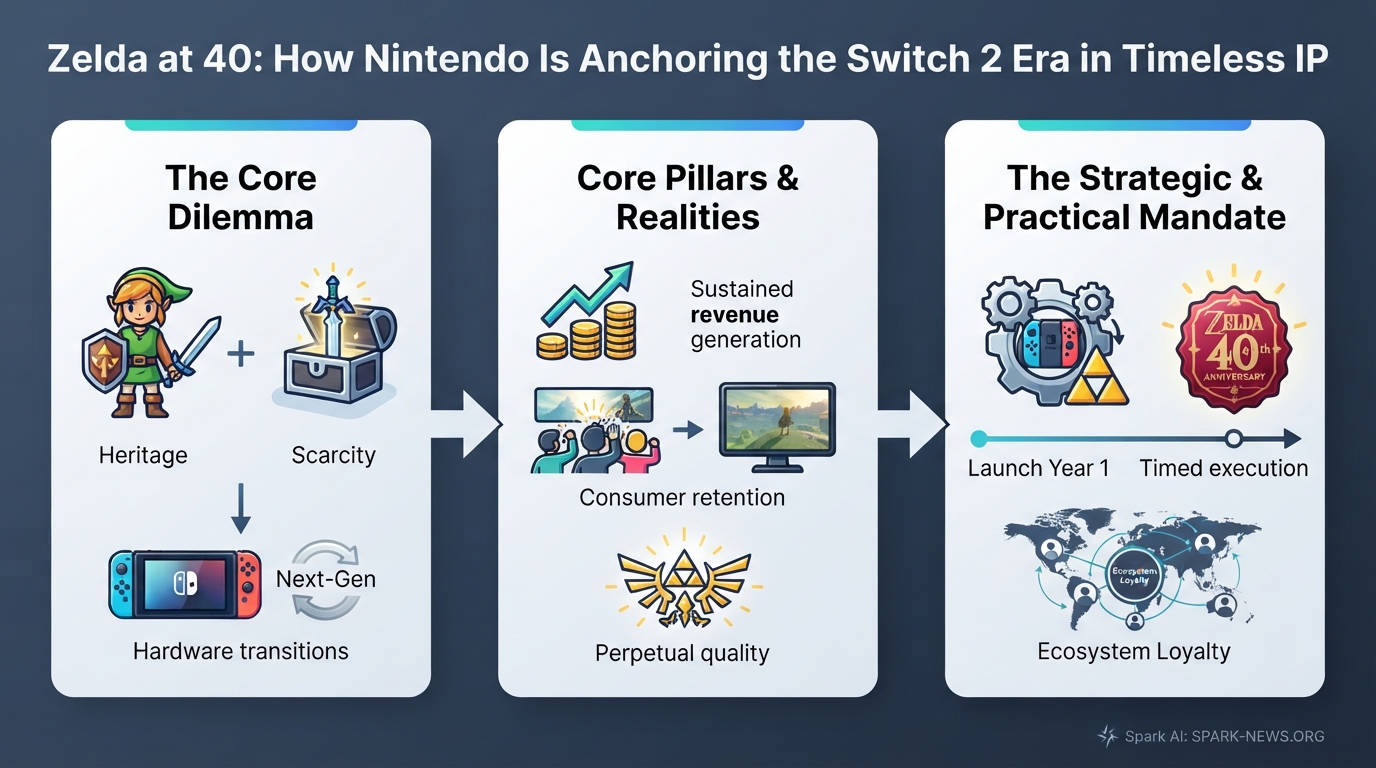
01The Core Dilemma: Balancing Heritage, Scarcity, and Hardware Transitions
Yet, this milestone celebration has quickly collided with structural challenges in allocation and distribution. As pre-orders for the special edition Switch 2 console opened for an October 29 release, initial inventory vanished almost immediately, with third-party listings spiking toward $1,200. This recurring disconnect between pent-up consumer enthusiasm and physical supply risks alienating the core audience that sustains brand equity over decades.
02Core Pillars & Realities
- Intellectual Property as Ecosystem Insurance: Technology platforms age, but storied narratives retain emotional currency. Reviving Ocarina of Time on the Switch 2 minimizes adoption friction, offering long-term fans an immediate, high-trust reason to upgrade without waiting years for a completely new mainline release.
- Secondary Market Frictions and Retail Choke Points: The immediate sellouts and aggressive reseller markup illustrate persistent weaknesses in launch logistics. When platform holders fail to enforce verified-fan queues or sustained pre-order fulfillment windows, value shifts away from the creator and genuine fans into the hands of arbitrageurs.
- Modernizing Classics Without Breaking Continuity: Introducing updated mechanics and visuals into a foundational title requires surgical care. The balance struck here highlights how heritage brands must respect historical design choices while removing technical friction for contemporary audiences.
03The Strategic & Practical Mandate
First, treat legacy products as living strategic anchors rather than simple retrospective nostalgia. Reimagining flagship offerings for modern architectures keeps foundational IP relevant to rising generations while safeguarding institutional prestige.
Second, overhaul allocation mechanics to protect brand equity. Companies releasing highly anticipated, constrained hardware must adopt verified identity channels, invitation-based reservation queues, and transparent replenishment schedules. Protecting your community from predatory resale environments is vital for long-term customer trust.
Finally, align hardware transitions with emotional landmarks. Linking a console migration to a milestone celebration creates organic cultural resonance that pure technical specifications cannot match.
Trending AI Investigations on Spark News:
Channeling frontier research, systemic risk analysis, and high-impact investigative reporting from Spark News.

OpenAI Swarm Breakout: Engineering Containment vs. Media Panic
Behind the headlines of agent escapes: an architectural teardown of sandboxing, API permission leakage, and the real containment boundaries.

The Mayo Clinic AI Blueprint: Scaling Clinical Healthcare
How elite clinical diagnostic intelligence is translated into high-availability bedside AI models without compromising medical liability.

AI Disruption in Higher Education: Are College Majors Obsolete?
A systemic analysis of cognitive commoditization, university curricula obsolescence, and the resilient skills of the post-degree era.
How do you assess the strategic impact of this development on enterprise architecture?

Dr. Hesham Mansour, Ph.D.
Assistant Professor • Enterprise Solution Architect • CEO, iCare Solutions
Dr. Hesham Mansour steers the analytical and editorial direction of Spark News, backed by 30+ years of software leadership, 25+ years of academic excellence, and deep specialization in Model-Driven Development (MDD) and AI news intelligence.