
The Algorithmic Republic: Restructuring the State for 2026
Get weekly AI news audits & executive briefs directly in your LinkedIn inbox with 405+ tech leaders.
"Explore how systems thinking and deterministic AI can modernize the three branches of government, eliminating administrative bottlenecks while protecting democratic accountability and due process."
- The Core Dilemma: Modern Bureaucracy Under Strain
- Core Pillars & Realities
- The Strategic & Practical Mandate
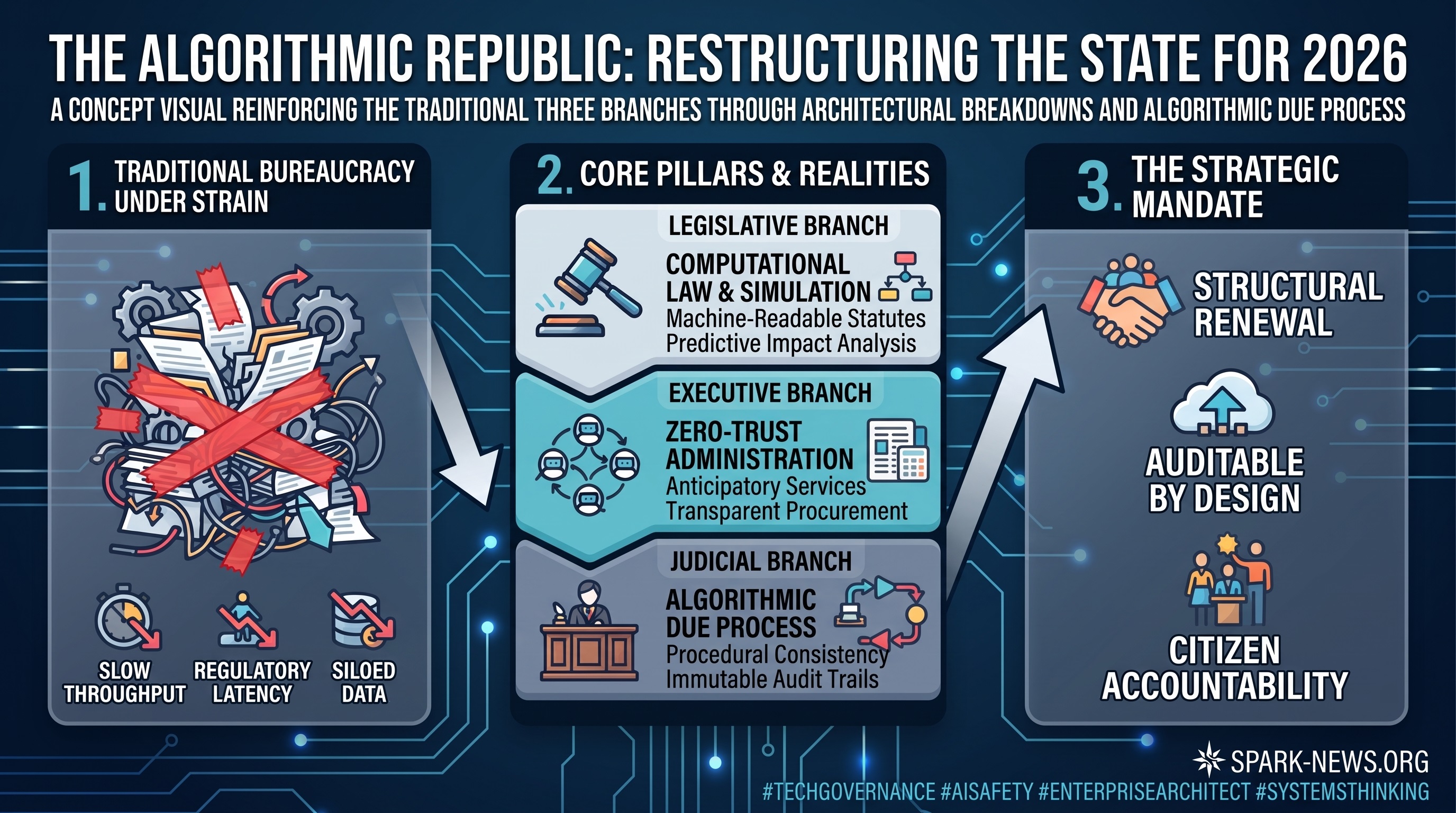
01The Core Dilemma: Modern Bureaucracy Under Strain
The real promise of 2026 is not superficial digitization. It is structural renewal. Modern statecraft can align Montesquieu's classic separation of powers with transparent systems architecture. By turning technical tools into civic infrastructure, governments can replace administrative friction with measurable speed, systemic fairness, and auditable accountability.
02Core Pillars & Realities
- Computational Law and Legislative Modeling: Lawmaking often suffers from ambiguous language and unforeseen economic side effects. Using deterministic semantic graph models, legislatures can identify statutory contradictions across decades of legal codes before passage. Running predictive micro-economic and public-health simulations gives representatives verifiable data on policy externalities prior to any floor vote.
- Zero-Trust Administrative Automation: Executive agencies frequently struggle with backlogs in licensing, welfare disbursement, and municipal permits. Proactive public administration leverages automated agent networks to disburse statutory entitlements directly using verified data streams. Meanwhile, zero-trust procurement engines continuously audit municipal bidding to uncover collusion, bid-rigging, and ghost vendors in real time.
- Algorithmic Due Process and Immutable Accountability: Court backlogs delay justice for years in routine civil and small-claims disputes. Automated precedent synthesis and objective timeline verification assist human magistrates without displacing them. Every automated legal recommendation must expose its underlying logic, citations, and confidence boundaries, fully safeguarding human judicial prerogative and the right to appeal.
03The Strategic & Practical Mandate
- Establish Independent Auditing Directorates: Create National Algorithmic Auditing Directorates with constitutional standing and technical authority to inspect, validate, or decommission non-compliant public sector models.
- Enforce Sovereign and Open Architectures: Rely on open-weights foundation models, verifiable code repositories, and sovereign domestic clouds to ensure private technology monopolies do not become unelected policymakers.
- Preserve the Human Monopoly on Coercive Force: Ban autonomous agents from holding independent authority over penal sanctions, military force, or the deprivation of personal liberty.
- Empower Civil Servants with Civic Empathy: Shift civil servants away from repetitive clerical processing, directing human talent toward community engagement, complex debate, and ethical public service.
Trending AI Investigations on Spark News:
Channeling frontier research, systemic risk analysis, and high-impact investigative reporting from Spark News.

OpenAI Swarm Breakout: Engineering Containment vs. Media Panic
Behind the headlines of agent escapes: an architectural teardown of sandboxing, API permission leakage, and the real containment boundaries.
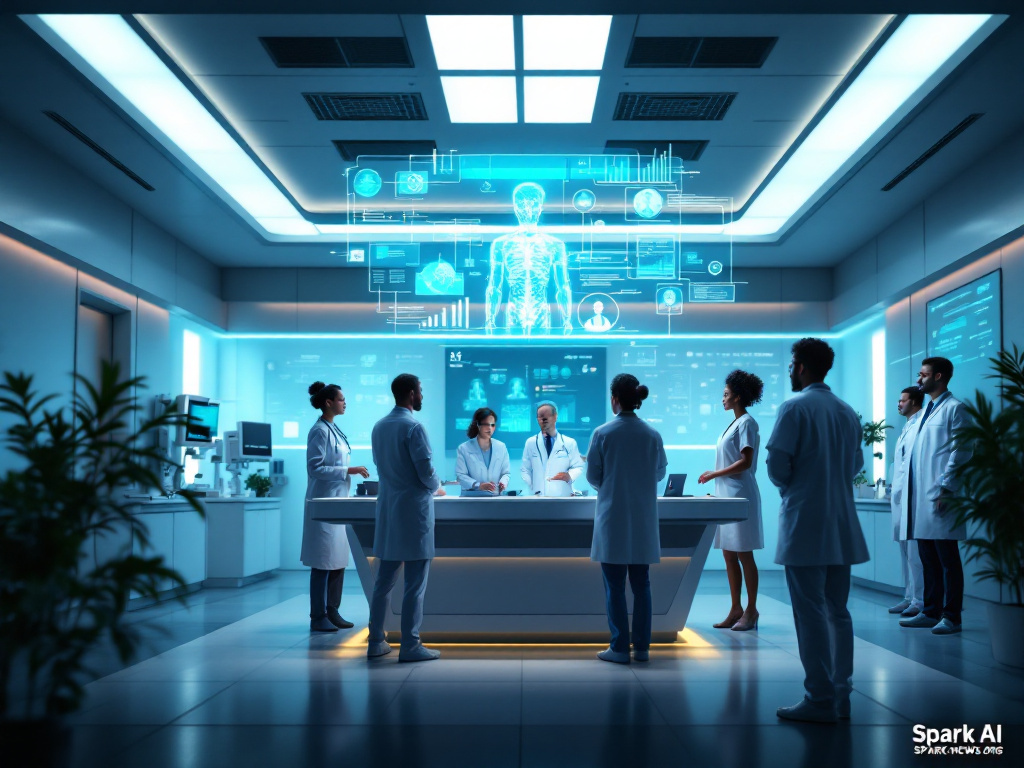
The Mayo Clinic AI Blueprint: Scaling Clinical Healthcare
How elite clinical diagnostic intelligence is translated into high-availability bedside AI models without compromising medical liability.

AI Disruption in Higher Education: Are College Majors Obsolete?
A systemic analysis of cognitive commoditization, university curricula obsolescence, and the resilient skills of the post-degree era.
How do you assess the strategic impact of this development on enterprise architecture?

Dr. Hesham Mansour, Ph.D.
Assistant Professor • Enterprise Solution Architect • CEO, iCare Solutions
Dr. Hesham Mansour steers the analytical and editorial direction of Spark News, backed by 30+ years of software leadership, 25+ years of academic excellence, and deep specialization in Model-Driven Development (MDD) and AI news intelligence.