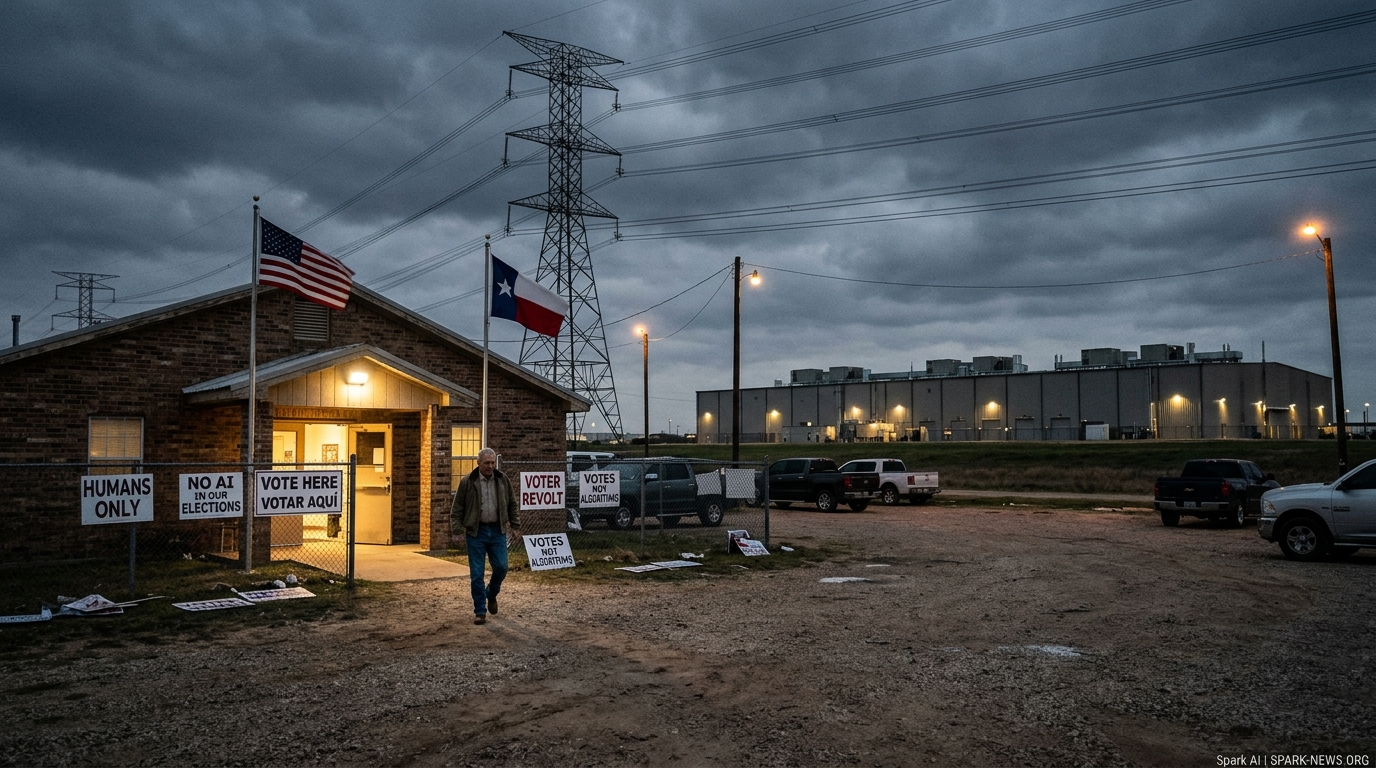
The AI Earthquake: Why Voters Just Revolted Against Big Tech
Get weekly AI news audits & executive briefs directly in your LinkedIn inbox with 418+ tech leaders.
"In a seismic election shift, American voters approved dozens of data center moratoriums and elected tech-skeptic leaders, including Texas Governor Gina Hinojosa. Driven by surging electric bills and water concerns, the backlash threatens delays for nearly two-thirds of planned 2028 U.S. data center capacity."
- What Just Happened?
- How the Internet & News Are Reacting
- The Backstory You Need to Know
- Why This Matters & What's Next
01What Just Happened?
The most dramatic upset landed in Texas, the undisputed national center of the server boom. Democrat Gina Hinojosa captured the governor's seat after pledging an immediate hold on data center approvals until lawmakers pass strict protections for electric grids, water supplies, air quality, and local property rights through 2027. Key races in Ohio, Georgia, and Arizona saw similar victories for candidates promising tighter controls on the physical footprint of computing power.
02How the Internet & News Are Reacting
Axios highlighted quotes from Brad Carson, co-founder of Americans for Responsible Innovation, who described the night as an unmistakable warning shot. The debate highlights a deep divide between corporate promises of innovation and local realities on the ground.
| Area of Debate | Tech Industry Stance | Voter & Community Reality |
|---|---|---|
| Energy & Utility Costs | Facilities bring grid upgrades and clean power investments | Local residents see higher monthly electric rates and blackout warnings |
| Water Resources | Advanced closed-loop cooling minimizes environmental damage | Billions of gallons diverted from local agricultural and residential supplies |
| Economic Development | Billions invested into local tax bases and high-tech jobs | Automated facilities create very few permanent local employment opportunities |
| Timeline & Permitting | Rapid construction is required to lead the global computing race | Towns demand formal moratoriums until 2027 legislative safeguards exist |
03The Backstory You Need to Know
However, local communities quickly felt the strain. Grid operators warned that large server clusters consume as much electricity as entire mid-sized cities. Residents saw power bills climb alongside reports of local water supplies cooling massive facilities. When affordability became the defining issue of the election cycle, data centers transformed into visible symbols of corporate resource diversion, setting up the political confrontation.
04Why This Matters & What's Next
Most analysts do not expect construction to halt permanently, but the terms of operation have changed. Moving forward, tech giants will have to build their own dedicated clean power plants, prove zero impact on local water supplies, and pay direct utility protections to nearby neighborhoods. The era of unchecked infrastructure expansion is over.
Bias Analysis
Connecting the Dots
Fact-Check Verification
- Texas Governor-elect Gina Hinojosa won on a platform pausing data center construction through mid-2027.
- Nearly two-thirds of planned 2028 U.S. data center capacity now faces regulatory and permitting delays.
- Texas alone was slated to host 41 percent of all new 2028 domestic computing infrastructure according to SemiAnalysis.
- Voters passed local bans and elected tech-skeptic leaders across key hub states including Ohio, Georgia, and Arizona.
Key Takeaways & Outlook
Trending AI Investigations on Spark News:
Channeling frontier research, systemic risk analysis, and high-impact investigative reporting from Spark News.

OpenAI Swarm Breakout: Engineering Containment vs. Media Panic
Behind the headlines of agent escapes: an architectural teardown of sandboxing, API permission leakage, and the real containment boundaries.

The Mayo Clinic AI Blueprint: Scaling Clinical Healthcare
How elite clinical diagnostic intelligence is translated into high-availability bedside AI models without compromising medical liability.

AI Disruption in Higher Education: Are College Majors Obsolete?
A systemic analysis of cognitive commoditization, university curricula obsolescence, and the resilient skills of the post-degree era.
How do you assess the strategic impact of this development on enterprise architecture?

Dr. Hesham Mansour, Ph.D.
Assistant Professor • Enterprise Solution Architect • CEO, iCare Solutions
Dr. Hesham Mansour steers the analytical and editorial direction of Spark News, backed by 30+ years of software leadership, 25+ years of academic excellence, and deep specialization in Model-Driven Development (MDD) and AI news intelligence.