More Services

trend-analysisJuly 2, 2026

Salmonella in Snacks: The 2026 Outbreak Exposing Gaps in Food Safety

Salmonella in Snacks: The 2026 Outbreak Exposing Gaps in Food Safety
Spark News AI | spark-news.org
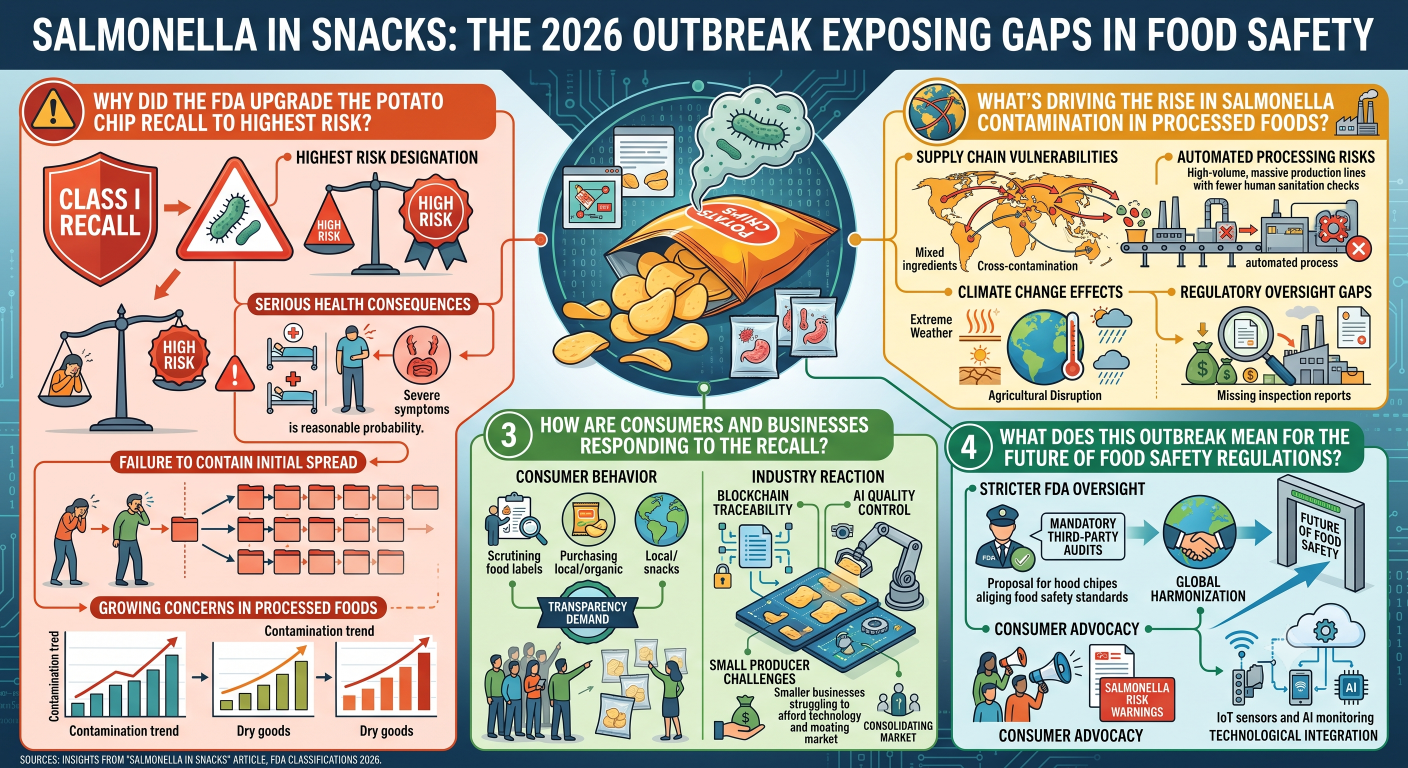
Enlarge Infographic
AI EXECUTIVE SUMMARY

"A major 2026 salmonella outbreak linked to potato chips has triggered the FDA's highest-risk recall. Explore the root causes, industry risks, and future of food safety amid rising contamination concerns and regulatory scrutiny."

  • Why Did the FDA Upgrade the Potato Chip Recall to Highest Risk?
  • What’s Driving the Rise in Salmonella Contamination in Processed Foods?
  • How Are Consumers and Businesses Responding to the Recall?
  • What Does This Outbreak Mean for the Future of Food Safety Regulations?

01Why Did the FDA Upgrade the Potato Chip Recall to Highest Risk?

In 2026, the FDA classified the Utz potato chip recall as a Class I event—the highest risk level—due to confirmed salmonella contamination. This designation is reserved for situations where there is a 'reasonable probability' of serious adverse health consequences or death. The upgrade reflects growing concerns over the spread of salmonella in processed foods, a trend exacerbated by complex global supply chains and potential lapses in manufacturing hygiene. The recall's expansion suggests initial containment efforts failed, raising questions about the effectiveness of current food safety protocols.

02What’s Driving the Rise in Salmonella Contamination in Processed Foods?

The 2026 salmonella outbreak in potato chips is not an isolated incident but part of a broader pattern. Factors contributing to this trend include: (1) Supply Chain Vulnerabilities: Ingredients sourced from multiple regions increase cross-contamination risks. (2) Automated Processing: High-volume production lines may lack adequate sanitation checks. (3) Climate Change: Warmer temperatures and extreme weather disrupt agricultural practices, heightening contamination risks. (4) Regulatory Gaps: Underfunded oversight agencies struggle to keep pace with the scale of modern food production. These systemic issues suggest salmonella outbreaks may become more frequent without structural reforms.

03How Are Consumers and Businesses Responding to the Recall?

The recall has triggered a dual response. Consumer Behavior: Shoppers are increasingly scrutinizing food labels and opting for brands with transparent safety records. Demand for locally sourced or organic snacks has surged as trust in mass-produced foods wanes. Industry Reaction: Major snack manufacturers are investing in blockchain-based traceability systems to track ingredients in real-time. Some companies are also adopting AI-driven quality control to detect contamination earlier. However, smaller producers may struggle to implement these costly measures, risking further market consolidation in favor of larger, better-resourced firms.

04What Does This Outbreak Mean for the Future of Food Safety Regulations?

The 2026 salmonella recall is likely to accelerate regulatory changes. Key developments to watch include: (1) Stricter FDA Oversight: Proposals for mandatory third-party audits of food processing facilities are gaining traction. (2) Global Harmonization: Efforts to align food safety standards across countries may intensify to address supply chain risks. (3) Consumer Advocacy: Groups are pushing for clearer labeling, including 'salmonella risk' warnings on high-risk products. (4) Technological Integration: Expect greater adoption of IoT sensors and AI in food safety monitoring. However, resistance from industry lobbyists could delay meaningful reforms, leaving gaps that future outbreaks may exploit.

Bias Analysis

Left NarrativeNeutral & BalancedRight Narrative
100% LeftCenter / Neutral100% Right
Coverage of the 2026 salmonella outbreak has largely focused on the immediate health risks and recall logistics, with less emphasis on systemic failures in food safety infrastructure. Potential Biases: (1) Corporate Influence: Some outlets may downplay industry accountability, framing the recall as an isolated incident rather than a symptom of broader issues. (2) Regulatory Criticism: Conservative-leaning media might overemphasize FDA inefficiency, while progressive outlets may highlight corporate negligence. (3) Geographic Bias: U.S.-centric reporting may ignore how global supply chains contribute to contamination risks. Missing Perspectives: Small-scale farmers and workers in food processing plants—who are often most affected by recalls—are rarely featured in mainstream coverage.

Connecting the Dots

Salmonella outbreaks in processed foods have been a recurring issue in the 2020s, but the 2026 potato chip recall marks a turning point due to its scale and the FDA's unprecedented response. Historically, salmonella was associated with raw foods like poultry or eggs, but the bacteria's presence in dry, shelf-stable products like chips signals a shift in contamination patterns. This evolution reflects changes in food production, including the use of shared equipment for multiple products and the global sourcing of ingredients. The recall also occurs amid rising public distrust in food safety systems, fueled by previous high-profile outbreaks in products ranging from peanut butter to leafy greens.

Fact-Check Verification

verified Facts

The FDA classified the Utz potato chip recall as a Class I event, the highest risk level, in 2026.

Salmonella contamination in potato chips is confirmed, though the exact source remains under investigation.

The recall affects products sold in New Jersey and potentially other states, with distribution details still emerging.

No deaths have been reported as of the latest FDA update, but cases of salmonella-related illness are being monitored.

rumors Or Conflicts

Claim: 'The recall is limited to a single production batch.' Status: Unverified. The FDA has not confirmed whether contamination is isolated or widespread.

Claim: 'Utz is the only brand affected.' Status: Unconfirmed. While Utz is the primary focus, other brands using shared suppliers or facilities may face scrutiny.

Claim: 'Salmonella in potato chips is a new phenomenon.' Status: Misleading. While rare, salmonella has been detected in dry foods before, including spices and nuts.

Key Takeaways & Outlook

The 2026 salmonella outbreak linked to potato chips is a stark reminder of the vulnerabilities in modern food systems. While the immediate focus is on containing the recall, the incident underscores the need for systemic reforms in food safety, supply chain transparency, and regulatory oversight. For consumers, the outbreak may accelerate shifts toward locally sourced or traceable foods, while businesses face pressure to adopt advanced monitoring technologies. Looking ahead, the frequency and severity of such outbreaks will depend on whether industry and regulators can collaborate to address root causes—from climate-driven agricultural risks to gaps in global supply chain oversight. Without proactive measures, salmonella and other pathogens could become an even greater threat to public health.