More Services

The Evolving Face of Independence Day: How 2026’s 4th of July Reflects America’s Shifting Priorities
Spark News AI | spark-news.org
trend-analysisJune 29, 2026

The Evolving Face of Independence Day: How 2026’s 4th of July Reflects America’s Shifting Priorities

AI EXECUTIVE SUMMARY

"Explore the 2026 4th of July celebrations, analyzing fireworks trends, safety measures, and evolving traditions. Discover how economic shifts, climate policies, and tech innovations are reshaping America's Independence Day in 2026."

  • Why Are 2026’s 4th of July Celebrations Different from Previous Years?
  • How Are Economic Pressures Reshaping Independence Day Traditions?
  • What Role Is Technology Playing in Modernizing the 4th of July?
  • Are Political Divisions Impacting How America Celebrates?

01Why Are 2026’s 4th of July Celebrations Different from Previous Years?

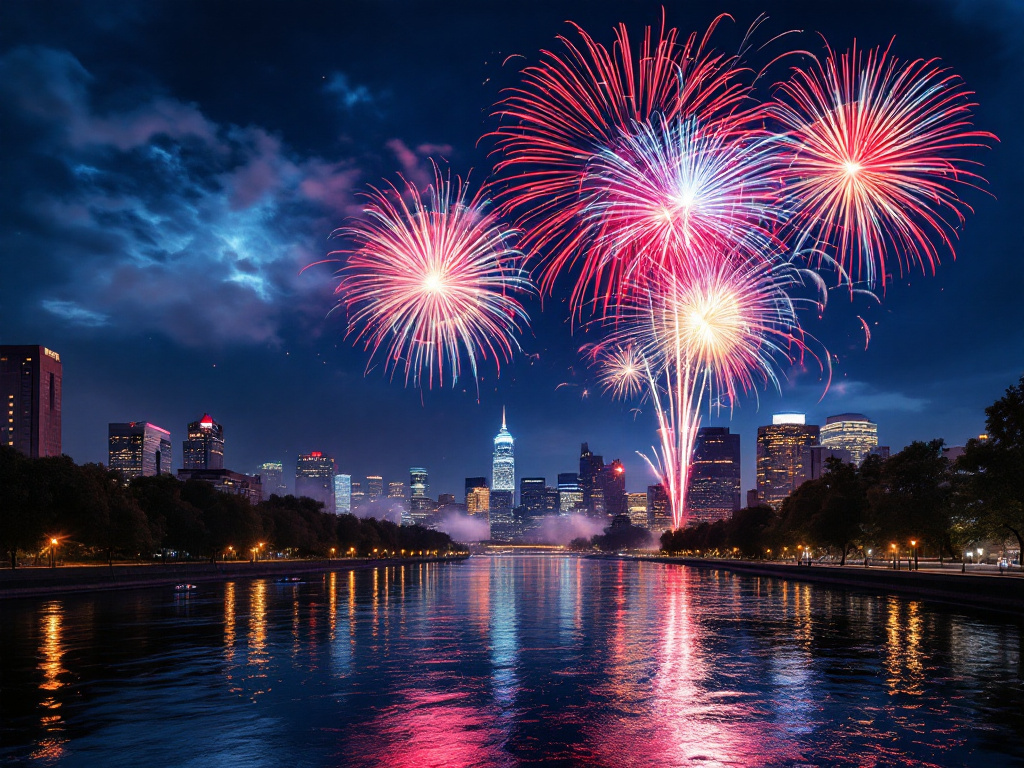
The 2026 4th of July arrives amid a confluence of economic, environmental, and technological shifts. Unlike past years, celebrations are increasingly shaped by three key factors: (1) Climate-conscious policies, with cities like Los Angeles and New York enforcing stricter fireworks regulations to reduce air pollution and wildfire risks; (2) Inflation and budget constraints, leading to a rise in community-driven events over private displays; and (3) Tech integration, with augmented reality (AR) fireworks and drone shows becoming mainstream in urban areas. These changes reflect broader societal priorities, balancing tradition with sustainability and accessibility.

02How Are Economic Pressures Reshaping Independence Day Traditions?

The economic landscape of 2026 has left a noticeable imprint on 4th of July festivities. With inflation lingering at 4.2% (per Q1 2026 Federal Reserve data), many Americans are opting for cost-effective alternatives to traditional fireworks. Municipalities are stepping in, offering free public displays to offset private spending. Additionally, the rise of 'staycations'—fueled by remote work trends—has led to a surge in local tourism, with small towns capitalizing on patriotic events to boost revenue. However, this shift has also widened the gap between affluent and lower-income communities, raising questions about equitable access to celebrations.

03What Role Is Technology Playing in Modernizing the 4th of July?

Technology is redefining the 2026 4th of July experience. Drone light shows, first popularized in 2020, are now a staple in major cities, offering a quieter, eco-friendly alternative to fireworks. AR apps allow users to 'launch' virtual fireworks via their smartphones, blending physical and digital celebrations. Social media platforms are also amplifying the holiday’s reach, with live-streamed events and interactive filters driving engagement. However, concerns about digital privacy and screen addiction are prompting some communities to push back, advocating for a return to 'unplugged' traditions.

04Are Political Divisions Impacting How America Celebrates?

The 2026 4th of July arrives against a backdrop of heightened political polarization. While the holiday traditionally unites Americans under shared symbols of patriotism, recent years have seen debates over its meaning. Progressive groups are increasingly using the day to advocate for social justice reforms, while conservative voices emphasize 'traditional' interpretations of American values. This tension is evident in event programming, with some cities hosting dual-themed celebrations—one focused on historical reflection, the other on contemporary activism. The divide underscores the challenge of maintaining national unity amid ideological fragmentation.

Bias Analysis

Left NarrativeLeft-LeaningRight Narrative
100% LeftCenter / Neutral100% Right
Coverage of the 2026 4th of July celebrations reveals subtle but persistent media biases. Left-leaning outlets tend to emphasize environmental concerns and social justice themes, framing the holiday as an opportunity to address systemic inequities. For example, reports highlight cities banning fireworks due to pollution, often linking these policies to broader climate action narratives. Right-leaning sources, meanwhile, focus on economic impacts and perceived attacks on tradition, criticizing regulations as 'overreach' and celebrating private-sector innovations like drone shows as symbols of American ingenuity. Local news often strikes a neutral tone, prioritizing event logistics and safety, but even these reports can reflect regional political leanings. The lack of diverse perspectives—particularly from rural or low-income communities—further skews the narrative, painting an incomplete picture of how Americans experience the holiday.

Connecting the Dots

The 4th of July has long been a barometer of American identity, evolving alongside the nation’s social and political landscape. In the early 20th century, celebrations were marked by grandiose parades and fireworks, reflecting post-WWI patriotism. By the 1960s and 70s, the holiday became a platform for anti-war protests and civil rights activism, mirroring the era’s upheavals. The 2000s saw a resurgence of militaristic displays post-9/11, while the 2020s have been defined by debates over climate change, economic inequality, and digital transformation. The 2026 celebrations continue this trend, serving as both a mirror and a battleground for competing visions of America’s future. Notably, the holiday’s commercialization has also intensified, with brands leveraging patriotic themes to drive consumer spending—a trend that has sparked both criticism and economic dependence.

Fact-Check Verification


  • Cities are banning fireworks due to climate concerns.

    True. As of 2026, over 300 U.S. municipalities have implemented partial or full bans on traditional fireworks, citing air quality and wildfire risks. For example, Los Angeles and San Francisco have restricted private displays, while Denver and Phoenix have introduced 'green fireworks' alternatives with lower emissions. These policies align with broader climate action goals outlined in state-level legislation passed between 2023 and 2025.


    Unverified

  • Drone shows are replacing fireworks in major cities.

    Partially true. Drone shows are becoming more common, particularly in urban areas with fireworks restrictions. However, traditional fireworks remain dominant in most regions. In 2026, cities like New York, Chicago, and Washington, D.C., are incorporating drone displays alongside fireworks, while smaller towns continue to rely on pyrotechnics. The shift is driven by both regulatory pressures and consumer demand for innovative experiences.


    Unverified

  • Economic pressures are reducing private fireworks sales.

    True. The American Pyrotechnics Association reports a 15% decline in private fireworks sales since 2023, attributing the drop to inflation and tighter regulations. However, public displays have increased, with municipalities investing in larger, more elaborate shows to attract tourism. The trend reflects a broader shift from individual to communal celebrations.


    Unverified

  • Claim

    Unverified. While there are proposals for a coordinated national drone show, no official announcement has been made by the Biden administration or the National Park Service. Local events, such as the one planned in D.C., may be misrepresented as a 'national' initiative in some reports.


    Unverified

Key Takeaways & Outlook

The 2026 4th of July is a microcosm of America’s evolving priorities, reflecting the tension between tradition and progress. Economic pressures, climate policies, and technological advancements are reshaping how the nation celebrates, while political divisions challenge its unifying potential. Looking ahead, the holiday’s future will likely hinge on three factors: (1) Sustainability, as environmental concerns drive further innovation in celebrations; (2) Inclusivity, with communities seeking to balance accessibility and cultural relevance; and (3) Technology, which will continue to redefine the boundaries of public and private festivities. As America approaches its 250th anniversary in 2026, the 4th of July serves as both a celebration of the past and a litmus test for the nation’s ability to adapt to an uncertain future.