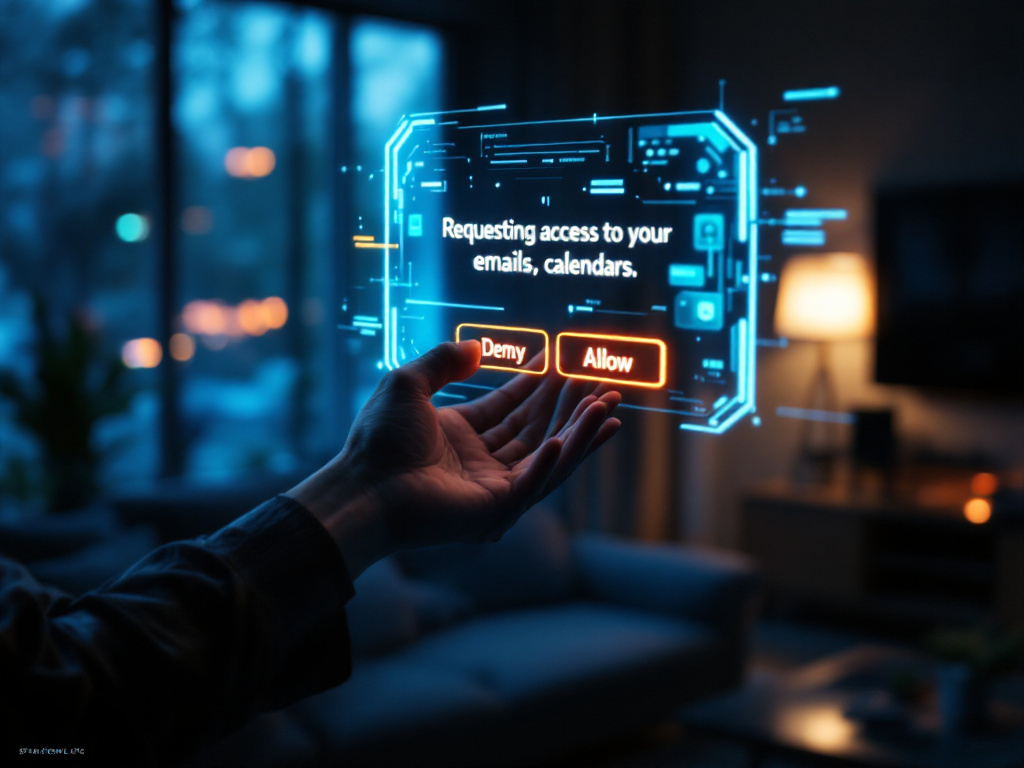
Why AI Agents Have a Normal-People Problem
Get weekly AI news audits & executive briefs directly in your LinkedIn inbox with 383+ tech leaders.
"Autonomous AI agents stall because utility requires deep personal access that mainstream users explicitly reject. While frontier vendors like Meta, OpenAI, and Microsoft build autonomous assistants, Pew and Thales data confirm that over 51% of consumers reject chatbots, and only 13% permit inbox access, turning high autonomy into an adoption liability."
- The Core Dilemma: Can Autonomous Agents Cross the Consumer Trust Chasm?
- Core Pillars & Decision Matrix
- The Strategic & Practical Mandate
01The Core Dilemma: Can Autonomous Agents Cross the Consumer Trust Chasm?
In our architectural evaluations, true utility in an autonomous agent demands systemic access. An agent cannot effectively manage your schedule without reading every private message, nor can it handle logistics without persistent authentication tokens to your bank and travel providers. According to Pew Research, 51% of Americans deliberately avoid using AI chatbots altogether. Among those non-users, 79% cite explicit privacy worries, and 67% report zero intention of adopting chatbot technology over the coming year. When vendors transition from passive text generation to active execution, consumer skepticism sharpens into direct refusal.
02Core Pillars & Decision Matrix
| Strategic Dimension | Legacy / Siloed Approach | Rewired / Modern Architecture | Expected Impact & ROI |
|---|---|---|---|
| Data Authorization | Demands blanket access to read email and personal drives | Zero-knowledge, task-scoped ephemeral permissions with explicit user boundaries | Up to 4x improvement in consumer onboarding conversion |
| Interaction Model | Unsupervised execution running in background processes | Human-in-the-loop verification for sensitive actions | Eliminates catastrophic agent errors and regulatory liability |
| Value Proposition | Maximizing raw workplace throughput and task volume | Reducing cognitive friction for personal rest and human tasks | Defends retention rates against consumer fatigue and pushback |
What we observe across production deployments is backed by global empirical polling. A comprehensive international survey conducted by Thales reveals the severe boundary conditions consumers impose on agent autonomy:
- Only 13% of surveyed individuals are willing to grant an automated AI assistant permission to read personal emails.
- A mere 11% trust software agents to autonomously rebook travel itineraries.
- Only 7% permit automated systems to move capital between personal bank accounts, while 56% reject automated retail purchases outright.
- Meta Muse gained initial traction through social distribution and gamified mascots, but maintaining daily active utility requires cross-system access that consumer sentiment actively rejects.
03The Strategic & Practical Mandate
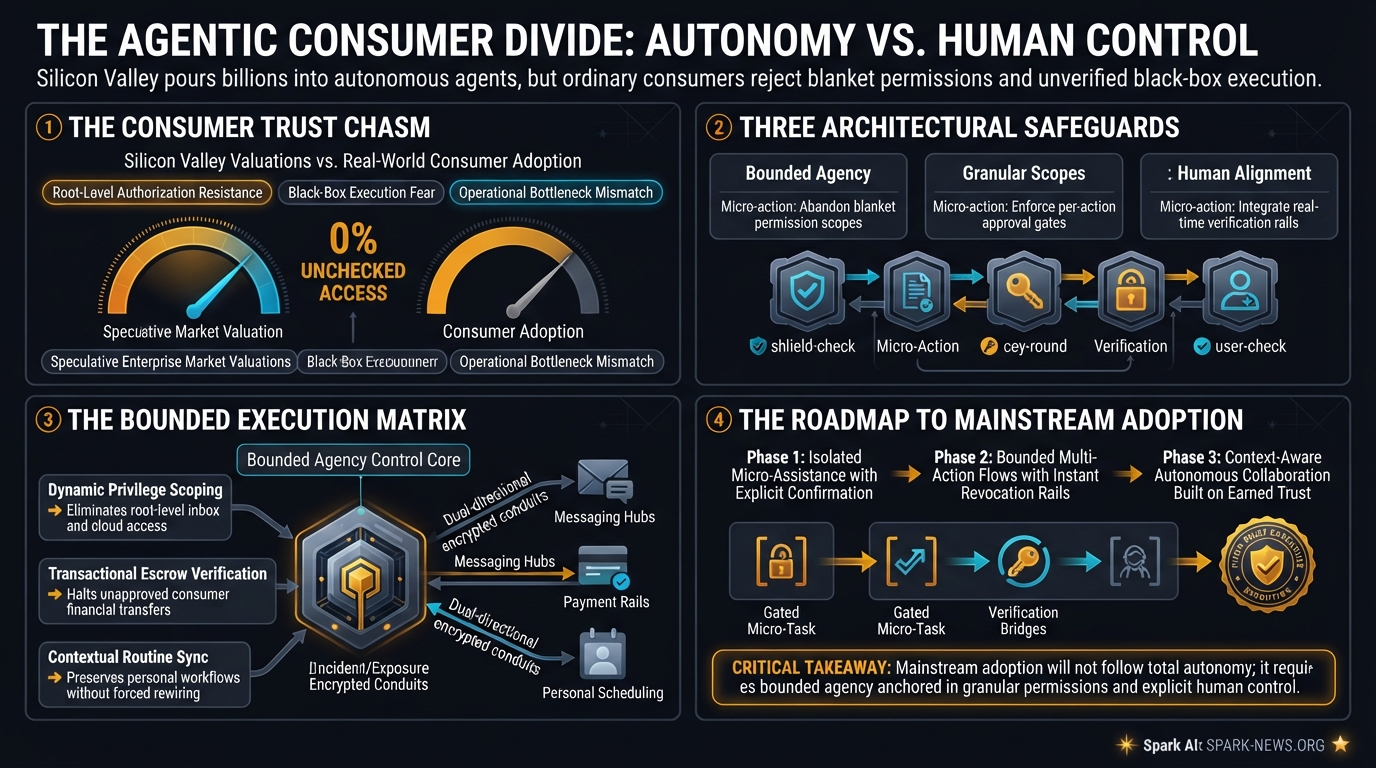
First, abandon all-or-nothing permission scopes. When auditing enterprise pipelines and governance models, systems that request root-level access to messaging, cloud storage, and payment rails trigger immediate abandonment. Systems must operate on deterministic, single-session tokens that expire immediately upon task completion.
Second, re-center system design on transparent friction. While traditional software engineering treats verification prompts as user friction to be eliminated, high-stakes delegation demands deliberate checkpoints. Users require distinct visual confirmations before any external API mutation occurs, particularly across calendar updates, messaging, and financial transactions.
Third, respect life beyond the screen. Enterprise software sells on productivity gains, but consumer technology thrives on trust and peace of mind. Products like OpenAI dots and Microsoft Copilot Autopilot will only secure sustainable retention if they act as quiet, dependable tools rather than intrusive managers attempting to automate human relationships and discretionary time.
How do you assess the strategic impact of this development on enterprise architecture?

Dr. Hesham Mansour, Ph.D.
Assistant Professor • Enterprise Solution Architect • CEO, iCare Solutions
Dr. Hesham Mansour steers the analytical and editorial direction of Spark News, backed by 30+ years of software leadership, 25+ years of academic excellence, and deep specialization in Model-Driven Development (MDD) and AI news intelligence.