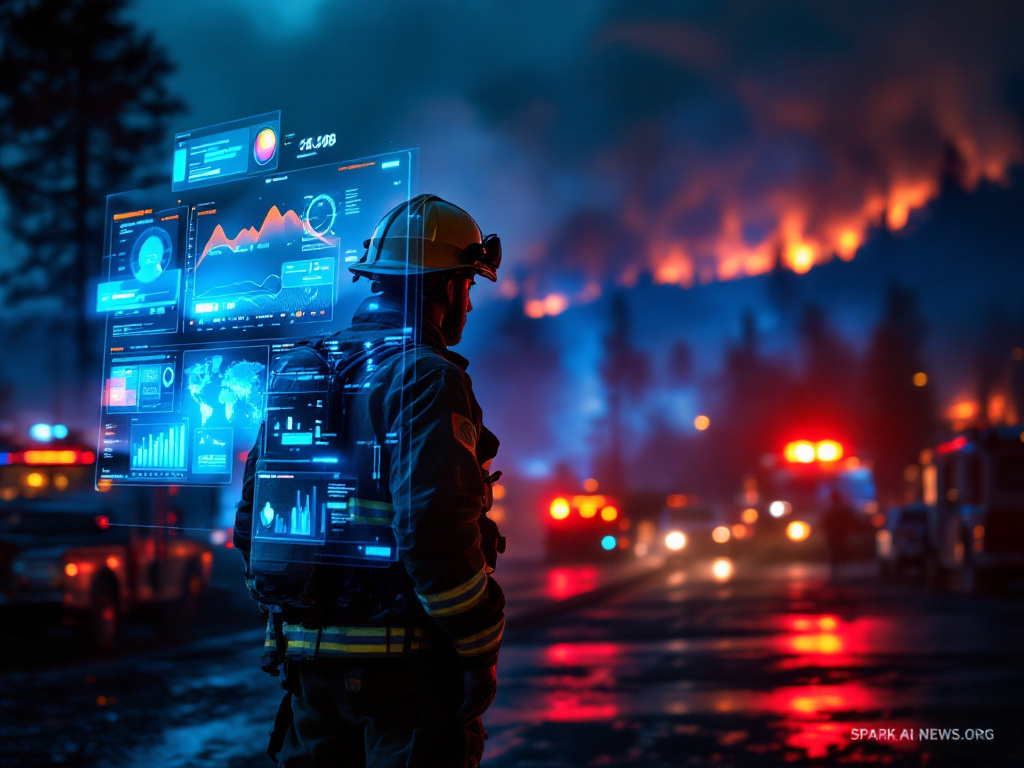
AI Is Changing How We Fight Wildfires
Get weekly AI news audits & executive briefs directly in your LinkedIn inbox with 405+ tech leaders.
"AI is reshaping wildfire response in 2026, helping agencies detect fires faster, deploy crews smarter, and save lives. Discover how systems thinking and technology are driving resilience."
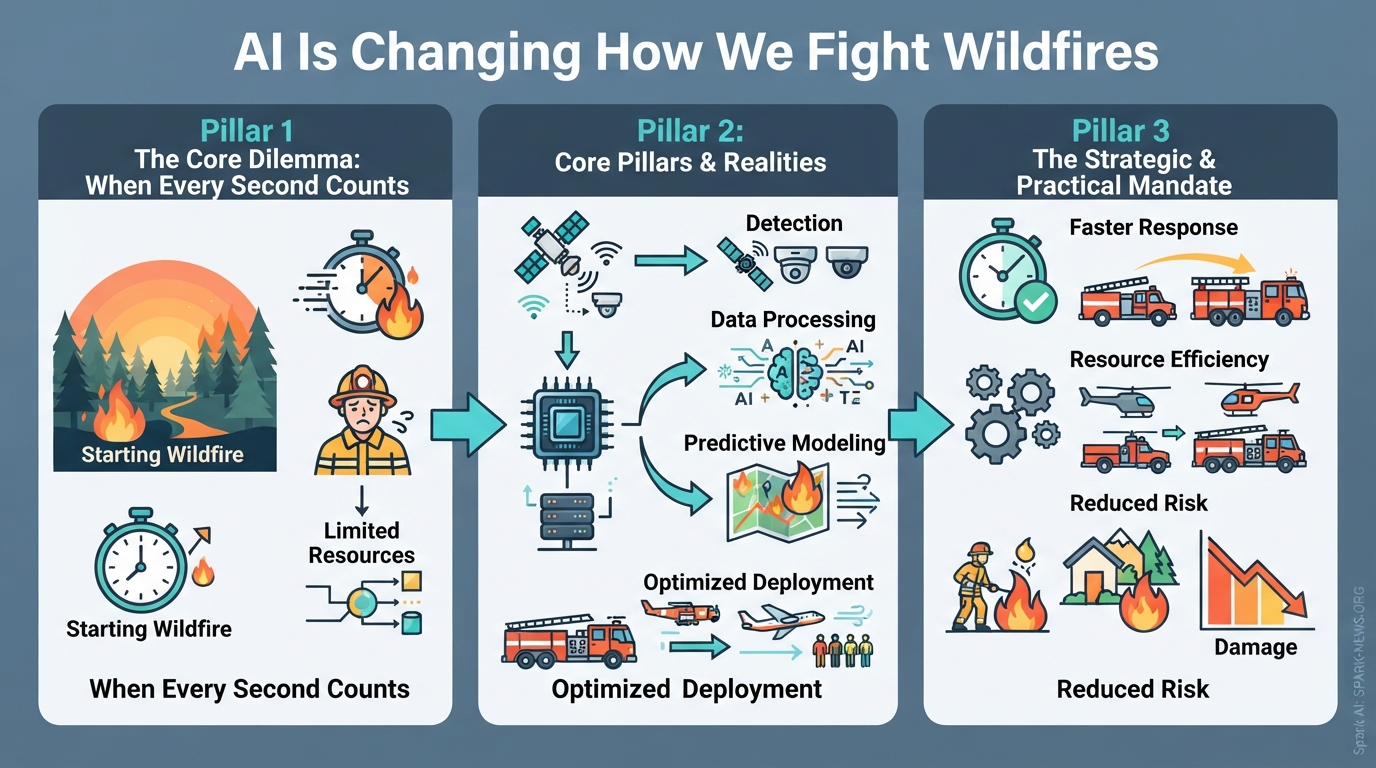
- The Core Dilemma: When Every Second Counts
- Core Pillars & Realities
- The Strategic & Practical Mandate
01The Core Dilemma: When Every Second Counts
When multiple fires ignite at once, fire officials face impossible choices. Do they protect a community now or a critical infrastructure tomorrow? Which fire might explode into a catastrophe if left unchecked? These aren’t hypotheticals. They’re daily realities for crews stretched thin across Western states, where climate change has turned fire seasons into year-round crises.
Enter AI—not as a replacement, but as a force multiplier. Agencies like the U.S. Wildland Fire Service are embedding AI into detection, monitoring, and even crew deployment. The goal isn’t to remove human judgment, but to give it sharper tools when the stakes couldn’t be higher.
02Core Pillars & Realities
- Detection at the speed of smoke: AI-powered cameras and satellites don’t just spot fires. They filter noise from reality in seconds, distinguishing a cookfire from a potential disaster before flames spread. In Oregon, wildfire cameras have already shortened response times, turning minutes into lifesaving windows.
- Example: A single AI triage system in California’s dense forests can process data from dozens of sensors, flagging anomalies that human eyes might miss during a shift.
- Prediction before the blaze: Researchers like Léonard Boussioux at the University of Washington are using machine learning to model how fires evolve under different suppression levels. The system doesn’t just predict spread; it simulates outcomes, helping officials decide where to deploy crews when every resource is precious.
- Key insight: The hardest call isn’t which fire to fight first. It’s which fire could become catastrophic if ignored—even for a day.
- Infrastructure that learns: From Colorado to Greece, new technologies are emerging not from labs alone, but from the field. A Colorado wildfire was contained faster thanks to AI that adapted to rugged terrain, proving technology works best when it’s co-designed with frontline responders.
- Why it matters: AI isn’t a silver bullet, but a silver thread—weaving through detection, prediction, and response to create a smarter ecosystem.
- Investment as a firewall: States like California are doubling down, with Governor Newsom highlighting robust funding for fire prevention and cutting-edge tools. This isn’t charity; it’s climate adaptation. The return isn’t just in acres saved, but in lives and livelihoods preserved.
03The Strategic & Practical Mandate
- Start with data, not algorithms: The best AI systems are built on clean, real-time data. Invest in sensors, satellite partnerships, and weather networks that feed reliable inputs into predictive models. Without data, even the smartest AI is guessing.
- Design for the frontline: Firefighters and emergency managers aren’t tech skeptics; they’re time-poor realists. Tools must be intuitive, fast, and integrated into existing workflows. A dashboard that takes 10 clicks to load is a dashboard no one will use at 3 a.m.
- Build for collaboration: Wildfires don’t respect borders. Neither should AI systems. Regional partnerships—like those between states or countries—can pool resources and share insights, turning isolated efforts into a unified defense.
- Measure what matters: Focus on outcomes, not just outputs. How many acres were saved? How many homes protected? How many lives did the system help preserve? Metrics should reflect resilience, not just reaction.
- Prepare for the next step: AI is evolving. So must our strategies. Regularly audit systems for bias, adapt to new climate realities, and stay agile. The goal isn’t to deploy AI once; it’s to embed it into a living, learning response ecosystem.
What’s the one gap in your current wildfire response strategy that AI could fill—if only you had the right data or partnership?
Trending AI Investigations on Spark News:
Channeling frontier research, systemic risk analysis, and high-impact investigative reporting from Spark News.

OpenAI Swarm Breakout: Engineering Containment vs. Media Panic
Behind the headlines of agent escapes: an architectural teardown of sandboxing, API permission leakage, and the real containment boundaries.

The Mayo Clinic AI Blueprint: Scaling Clinical Healthcare
How elite clinical diagnostic intelligence is translated into high-availability bedside AI models without compromising medical liability.

AI Disruption in Higher Education: Are College Majors Obsolete?
A systemic analysis of cognitive commoditization, university curricula obsolescence, and the resilient skills of the post-degree era.
How do you assess the strategic impact of this development on enterprise architecture?

Dr. Hesham Mansour, Ph.D.
Assistant Professor • Enterprise Solution Architect • CEO, iCare Solutions
Dr. Hesham Mansour steers the analytical and editorial direction of Spark News, backed by 30+ years of software leadership, 25+ years of academic excellence, and deep specialization in Model-Driven Development (MDD) and AI news intelligence.