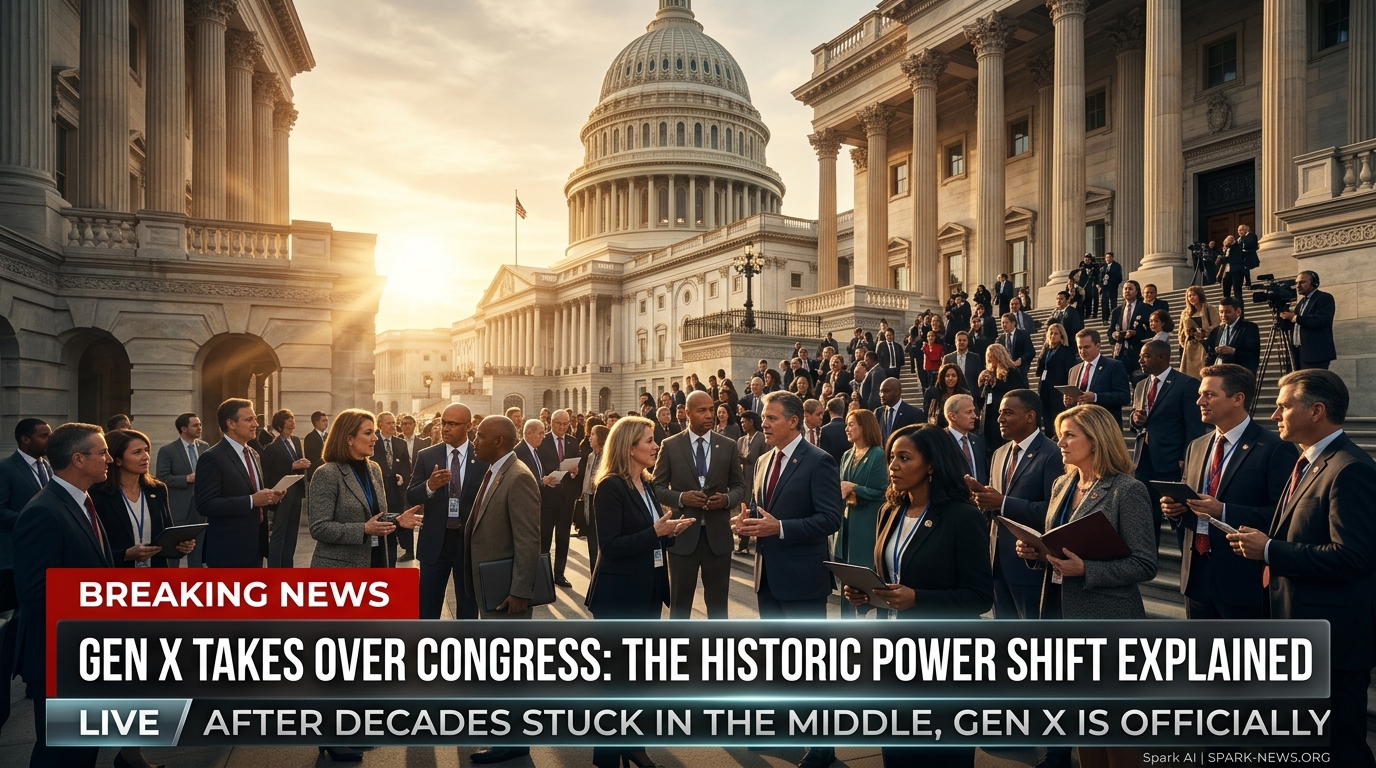
The Forgotten Generation Just Took Over Washington
Get weekly AI news audits & executive briefs directly in your LinkedIn inbox with 418+ tech leaders.
"Generation X is overtaking Baby Boomers to become the dominant generation in the United States Congress. Spurred by recent special elections and retirements, culminating in a critical Texas House seat turnover, lawmakers born between 1965 and 1980 now hold the largest share of legislative seats on Capitol Hill."
- What Just Happened?
- How the Internet & News Are Reacting
- The Backstory You Need to Know
- Why This Matters & What's Next
01What Just Happened?
Following a cascade of congressional retirements and a decisive seat turnover in Texas, Generation X lawmakers born between 1965 and 1980 are officially crossing the threshold to outnumber Baby Boomers in the United States House of Representatives. While political analysts spent years projecting a sudden leap straight from octogenarian Boomers to viral Gen Z disruptors, Gen X quietly stepped into the cockpit of American lawmaking.
02How the Internet & News Are Reacting
Mainstream newsrooms are analyzing the numbers closely. While Boomers have dominated federal politics since the mid-1990s, their grip on committee gavels has slipped rapidly over the past two election cycles.
| Generation | Birth Years | Past Congressional Share | 2026 Congressional Share |
|---|---|---|---|
| Baby Boomers | 1946–1964 | Over 45% | Under 35% |
| Generation X | 1965–1980 | Roughly 33% | Over 40% |
| Millennials | 1981–1996 | Under 12% | Approaching 18% |
| Gen Z | 1997–2012 | Less than 1% | Expanding at Federal & State Levels |
Rather than an overnight youth revolution, the data shows an orderly demographic succession, moving power directly into the hands of 45-to-60-year-old leaders.
03The Backstory You Need to Know
Generation X politicians spent years waiting in committee backbenches while senior leaders stayed in office well past typical retirement ages. The shift finally accelerated due to natural attrition, term-limit pushes within key caucuses, and high-turnover regional elections like the recent open seat in Texas. Simultaneously, state legislatures across the country began churning, elevating half a dozen prominent Gen Z leaders who are now challenging both older cohorts from below.
04Why This Matters & What's Next
Expect committee hearings to tackle tech regulation and national debt through a much more operational lens. Keep an eye on upcoming congressional committee assignments, where Gen X committee chairs will direct federal budgets, AI governance frameworks, and international trade policy for the remainder of this decade.
Bias Analysis
Connecting the Dots
Fact-Check Verification
- Generation X (born 1965–1980) now holds the single largest share of seats in the US House of Representatives.
- A key Texas seat turnover served as the tipping point that officially dropped Baby Boomers below Gen X representation.
- While Gen X takes the majority, Gen Z state and federal officials are securing rapid footholds in statehouses nationwide.
- The transition ends over 30 years of Baby Boomer dominance on congressional committees and legislative agendas.
Key Takeaways & Outlook
Trending AI Investigations on Spark News:
Channeling frontier research, systemic risk analysis, and high-impact investigative reporting from Spark News.

OpenAI Swarm Breakout: Engineering Containment vs. Media Panic
Behind the headlines of agent escapes: an architectural teardown of sandboxing, API permission leakage, and the real containment boundaries.

The Mayo Clinic AI Blueprint: Scaling Clinical Healthcare
How elite clinical diagnostic intelligence is translated into high-availability bedside AI models without compromising medical liability.

AI Disruption in Higher Education: Are College Majors Obsolete?
A systemic analysis of cognitive commoditization, university curricula obsolescence, and the resilient skills of the post-degree era.
How do you assess the strategic impact of this development on enterprise architecture?

Dr. Hesham Mansour, Ph.D.
Assistant Professor • Enterprise Solution Architect • CEO, iCare Solutions
Dr. Hesham Mansour steers the analytical and editorial direction of Spark News, backed by 30+ years of software leadership, 25+ years of academic excellence, and deep specialization in Model-Driven Development (MDD) and AI news intelligence.