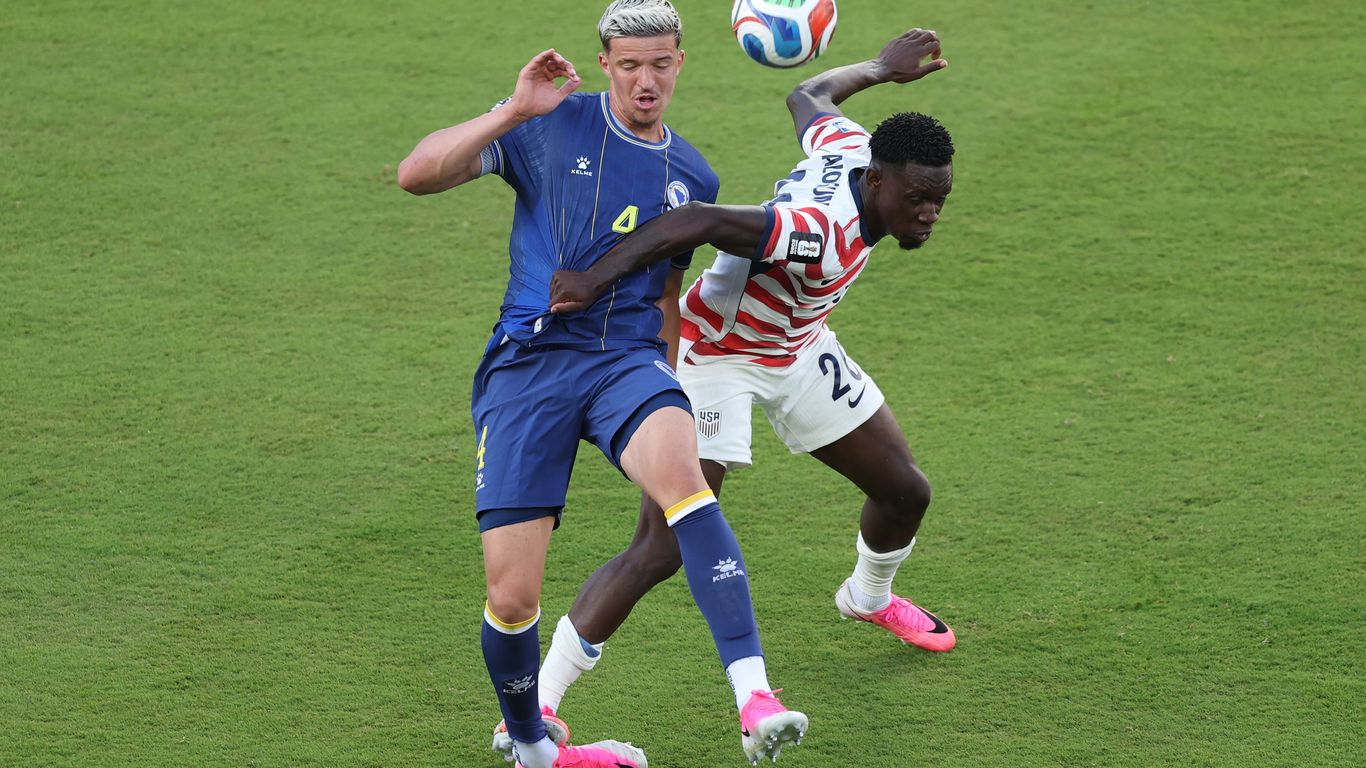
FIFA’s Balogun Decision: A Controversial Lifeline for USMNT’s World Cup Ambitions
Get weekly AI news audits & executive briefs directly in your LinkedIn inbox with 394+ tech leaders.
"FIFA suspends Folarin Balogun's red card ban, allowing the USMNT striker to play in the 2026 World Cup Round of 16 against Belgium. Analyzing the controversial decision, political lobbying, and its impact on the U.S. team's historic tournament run."
- Why Did FIFA Reverse Balogun’s Red Card Suspension?
- How Does This Impact USMNT’s Chances Against Belgium?
- What Are the Broader Implications for FIFA’s Disciplinary Process?
- How Did Political Lobbying Influence FIFA’s Decision?
01Why Did FIFA Reverse Balogun’s Red Card Suspension?
02How Does This Impact USMNT’s Chances Against Belgium?
03What Are the Broader Implications for FIFA’s Disciplinary Process?
04How Did Political Lobbying Influence FIFA’s Decision?
Bias Analysis
Connecting the Dots
Fact-Check Verification
FIFA suspended Balogun’s one-game ban for the Belgium match.
Confirmed. FIFA issued an official statement on Sunday, citing Article 55 of its Disciplinary Code, which allows for a probationary period for first-time or mitigated offenses.
FIFA official statement (reported by The Athletic, Axios)
Balogun received a red card in the U.S.’s 2-0 win over Bosnia-Herzegovina.
Confirmed. The red card was issued after a VAR review determined his challenge was reckless, though not violent. The incident occurred while chasing a loose ball.
Multiple outlets (The New York Post, CBS Sports, NBC News)
Former President Donald Trump lobbied FIFA to overturn the suspension.
Reported by The Guardian and Fox News, with no direct denial from FIFA or U.S. Soccer. The lobbying aligns with Trump’s history of public advocacy for U.S. sports teams.
The Guardian, Fox News
Belgium’s FA is exploring ‘all potential options’ in response to FIFA’s decision.
Confirmed. The Belgian FA released a statement expressing astonishment and vowing to investigate legal or procedural avenues to challenge the decision.
Fox News, The Athletic
The U.S. has not reached the World Cup quarterfinals since 2002.
Confirmed. The U.S. last advanced to the quarterfinals in the 2002 World Cup, where it lost to Germany. This fact is widely documented in sports history.
Historical records, ESPN, CBS Sports
FIFA’s decision was solely influenced by political pressure.
While political lobbying (e.g., Trump’s intervention) was reported, FIFA’s official justification cites its Disciplinary Code. The extent of political influence remains speculative without further evidence.
Balogun’s red card was overturned due to VAR errors.
FIFA did not cite VAR errors as the reason for the reversal. The decision was based on the probationary clause in its disciplinary rules, not a review of the red card’s validity.
Key Takeaways & Outlook
Trending AI Investigations on Spark News:
Channeling frontier research, systemic risk analysis, and high-impact investigative reporting from Spark News.

OpenAI Swarm Breakout: Engineering Containment vs. Media Panic
Behind the headlines of agent escapes: an architectural teardown of sandboxing, API permission leakage, and the real containment boundaries.

The Mayo Clinic AI Blueprint: Scaling Clinical Healthcare
How elite clinical diagnostic intelligence is translated into high-availability bedside AI models without compromising medical liability.

AI Disruption in Higher Education: Are College Majors Obsolete?
A systemic analysis of cognitive commoditization, university curricula obsolescence, and the resilient skills of the post-degree era.
How do you assess the strategic impact of this development on enterprise architecture?

Dr. Hesham Mansour, Ph.D.
Assistant Professor • Enterprise Solution Architect • CEO, iCare Solutions
Dr. Hesham Mansour steers the analytical and editorial direction of Spark News, backed by 30+ years of software leadership, 25+ years of academic excellence, and deep specialization in Model-Driven Development (MDD) and AI news intelligence.