The Anti-Social Century: Why Americans Are Retreating From Each Other
Featured in the weekly "Spark News: AI Media Brief" newsletter series on LinkedIn.
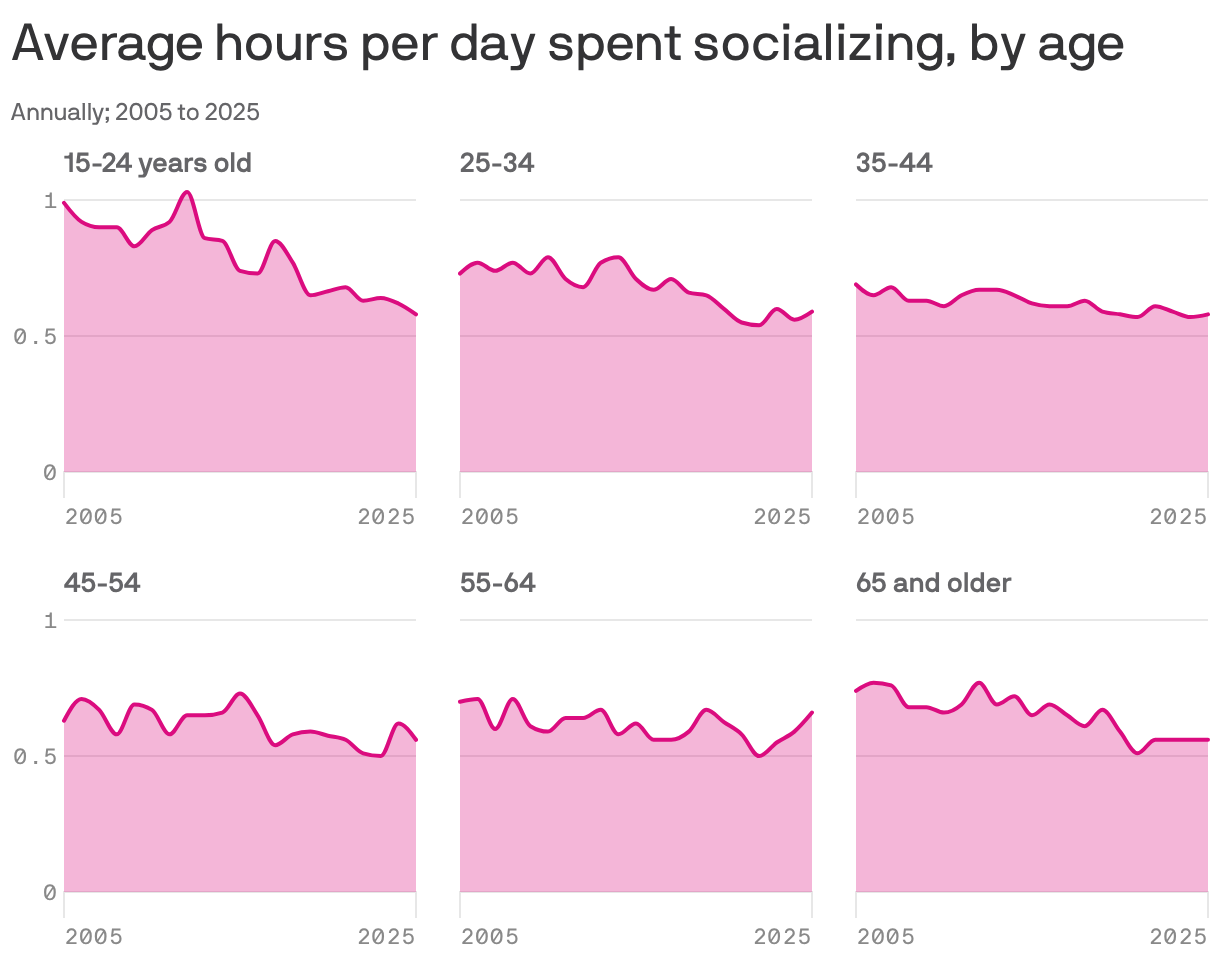
"Americans across all generations are socializing 22% less than 20 years ago, driven by remote work, digital substitution, and vanishing gathering spaces. This shift impacts mental health, economic mobility, and community cohesion, signaling a fundamental change in how society functions in 2026."
- What Does the Data Reveal About America’s Social Decline?
- Is Technology the Villain—or Just a Scapegoat?
- How Is This Affecting Health and Economic Mobility?
- Can We Reverse the Trend—or Is This the New Normal?
01What Does the Data Reveal About America’s Social Decline?
02Is Technology the Villain—or Just a Scapegoat?
03How Is This Affecting Health and Economic Mobility?
04Can We Reverse the Trend—or Is This the New Normal?
Bias Analysis
Connecting the Dots
Fact-Check Verification
Average daily socializing time declined from 45 to 35 minutes over 20 years.
Confirmed by U.S. Bureau of Labor Statistics’ American Time Use Survey (2026). Data is nationally representative and adjusted for seasonal variations.
Teens spend 4.8 hours daily on social media apps like TikTok and Instagram.
Reported by Gallup (2025) based on a sample of 1,500 U.S. teens. Margin of error: ±3%.
15% decline in libraries, churches, and coffee shops since 2020.
Documented in a 2025 University of Colorado Boulder study analyzing commercial and public space closures. Methodology included municipal records and satellite imagery.
38% of U.S. jobs are hybrid or fully remote in 2026.
Source: Stanford Remote Work Project (2026), based on IRS tax filings and employer surveys.
Digital substitution is the primary driver of social decline.
While widely cited, a 2025 MIT study found that remote work and urban design explain 60% of the variance in socializing time, compared to 25% for screen time. This challenges the narrative that technology is the sole culprit.
Americans are socializing less because they’re "too busy."
Scary Mommy and WBUR analyses show that free time has actually increased since 2006, with the decline in socializing attributed to how time is spent (e.g., solitary screen use) rather than lack of time.
Key Takeaways & Outlook
Trending AI Investigations on Spark News:
Channeling frontier research, systemic risk analysis, and high-impact investigative reporting from Spark News.

OpenAI Swarm Breakout: Engineering Containment vs. Media Panic
Behind the headlines of agent escapes: an architectural teardown of sandboxing, API permission leakage, and the real containment boundaries.

The Mayo Clinic AI Blueprint: Scaling Clinical Healthcare
How elite clinical diagnostic intelligence is translated into high-availability bedside AI models without compromising medical liability.

AI Disruption in Higher Education: Are College Majors Obsolete?
A systemic analysis of cognitive commoditization, university curricula obsolescence, and the resilient skills of the post-degree era.
How do you assess the strategic impact of this development on enterprise architecture?

Dr. Hesham Mansour, Ph.D.
Assistant Professor • Enterprise Solution Architect • CEO, iCare Solutions
Dr. Hesham Mansour steers the analytical and editorial direction of Spark News, backed by 30+ years of software leadership, 25+ years of academic excellence, and deep specialization in Model-Driven Development (MDD) and AI news intelligence.