A Farmer Cleared His Yard in Egypt. He Unearthed a Giant Ramses II Colossus Instead.
Get weekly AI news audits & executive briefs directly in your LinkedIn inbox with 405+ tech leaders.
"An Egyptian farmer in Bahbeit El-Hegara struck carved pink granite in his yard, uncovering colossal royal statues of Pharaoh Ramses II once standing 28 feet high."
- What Just Happened?
- How the Internet & News Are Reacting
- The Backstory You Need to Know
- Why This Matters & What's Next
01What Just Happened?
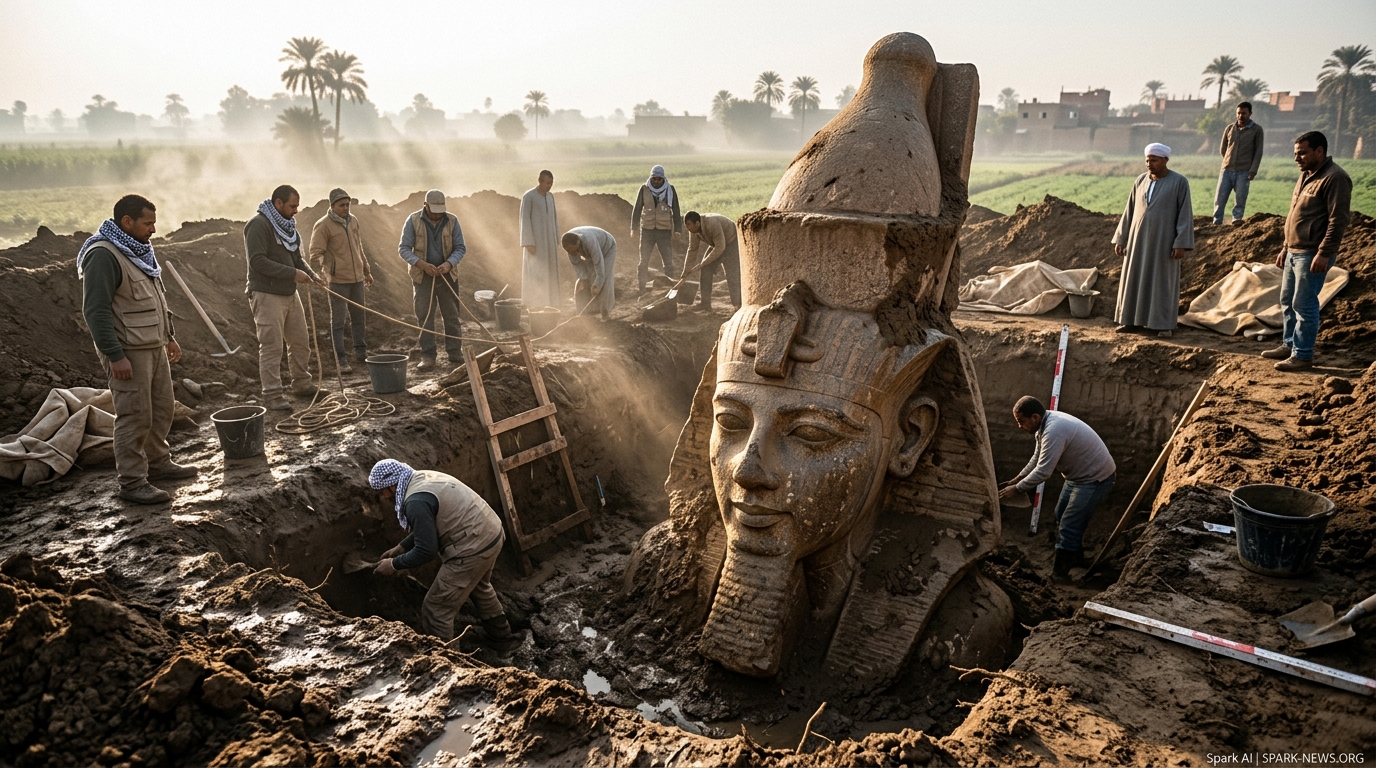
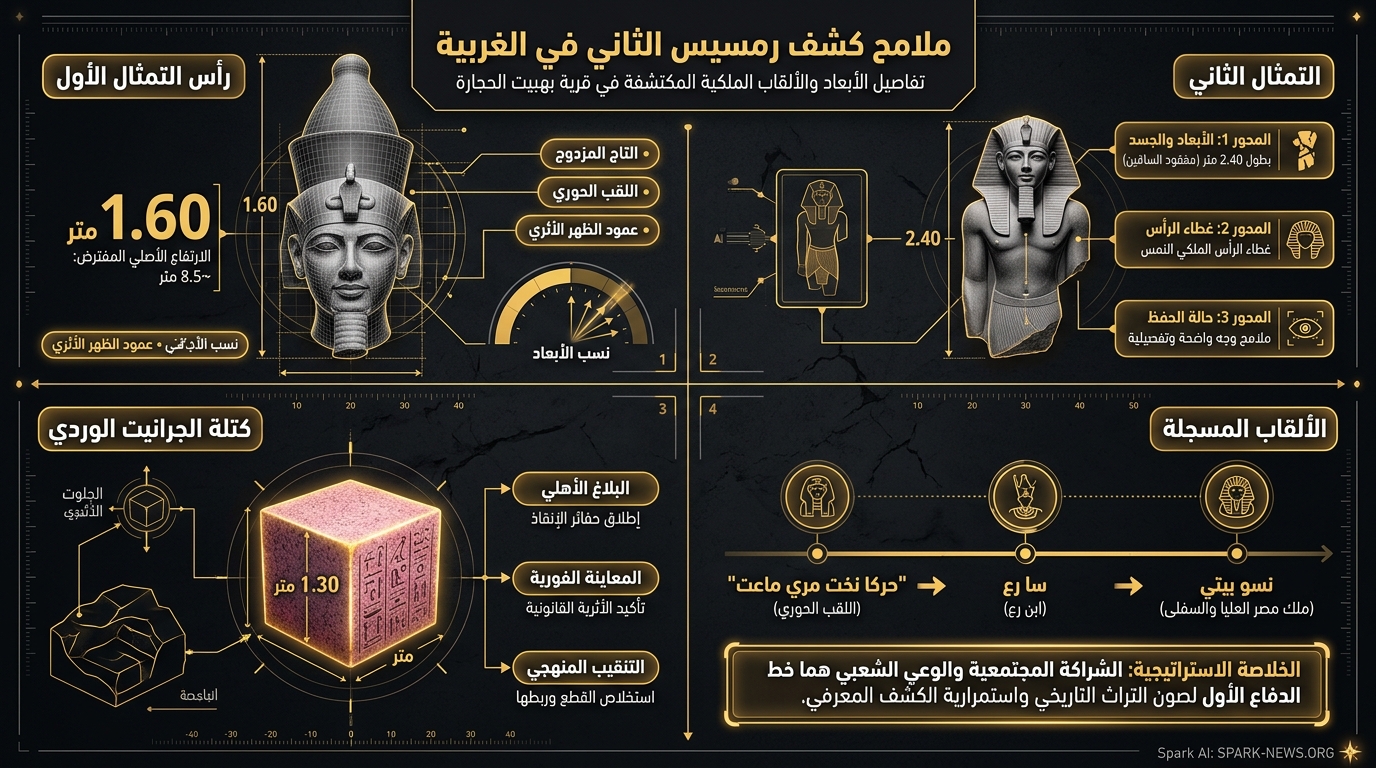
Emergency rescue excavation teams from the Supreme Council of Antiquities, led by Dr. Hisham El-Leithy and coordinated with Minister of Tourism and Antiquities Sherif Fathy, rushed to the site. What they uncovered stunned everyone. Crews hoisted a massive 5.2-foot (1.6-meter) head of Pharaoh Ramses II wearing the iconic double crown of Upper and Lower Egypt. The upper section of the back pillar still bore his royal Horus name, 'The Strong Bull, Beloved of Maat.' Archaeological engineers estimate the original, intact statue stood approximately 28 feet (8.5 meters) tall on its pedestal. Right beside it, excavators revealed a second 7.8-foot (2.4-meter) royal sculpture clad in the nemes headdress, alongside a massive block of pink granite inscribed with the king's sacred titles.
02How the Internet & News Are Reacting
| Detail | Viral Social Media Rumor | Verified Archaeological Reality |
|---|---|---|
| Location | Hidden golden tomb with secret crypts | An open dirt yard in front of a rural home |
| Finds | Perfectly intact solid-gold statues | Colossal granite royal fragments and inscribed blocks |
| Total Height | Skyscraper-sized complete colossus | 5.2-foot head from an estimated 28-foot monument |
| The Finder | Clandestine night dig gone wrong | Fast, voluntary reporting by a local resident |
Online commentary quickly turned the finder into a folk hero. Commentators noted that ordinary community vigilance remains the sharpest defense against looting, celebrating the unmistakable visage of Egypt's greatest pharaoh stepping back into the light.
03The Backstory You Need to Know
The real force behind these monuments was Ramses II himself. As the third king of the 19th Dynasty, he governed Egypt for an astonishing 66 years between 1279 and 1213 BCE. Ramses built on a superhuman scale. From the cliff temples of Abu Simbel and the Ramesseum to sweeping additions at Luxor and his brand-new capital, Pi-Ramesses, in the eastern Delta, he stamped his identity into stone across the entire empire. These newly uncovered statues are physical remnants of that sweeping northern building blitz.
04Why This Matters & What's Next
Beyond pure archaeology, the find shines a much-needed spotlight on the tourism potential of the Nile Delta, whose ancient treasures rival the famed tombs of Upper Egypt. Local leaders hope this turns Gharbia into a legitimate cultural stop, while museum visitors can soon expect newly restored, monumental royal masterpieces to enter Egypt's premier galleries.
Bias Analysis
Connecting the Dots
Fact-Check Verification
- A resident of Bahbeit El-Hegara in the Nile Delta discovered carved royal granite while leveling ground outside his home.
- Archaeologists recovered a 5.2-foot head of Ramses II from a colossus originally estimated to stand 28 feet high.
- Crews also uncovered a second 7.8-foot royal statue wearing a nemes headdress, alongside inscribed pink granite blocks.
- The carvings clearly display Ramses II's royal titles, including 'King of Upper and Lower Egypt' and 'Son of Ra.'
Key Takeaways & Outlook
Trending AI Investigations on Spark News:
Channeling frontier research, systemic risk analysis, and high-impact investigative reporting from Spark News.

OpenAI Swarm Breakout: Engineering Containment vs. Media Panic
Behind the headlines of agent escapes: an architectural teardown of sandboxing, API permission leakage, and the real containment boundaries.

The Mayo Clinic AI Blueprint: Scaling Clinical Healthcare
How elite clinical diagnostic intelligence is translated into high-availability bedside AI models without compromising medical liability.

AI Disruption in Higher Education: Are College Majors Obsolete?
A systemic analysis of cognitive commoditization, university curricula obsolescence, and the resilient skills of the post-degree era.
How do you assess the strategic impact of this development on enterprise architecture?

Dr. Hesham Mansour, Ph.D.
Assistant Professor • Enterprise Solution Architect • CEO, iCare Solutions
Dr. Hesham Mansour steers the analytical and editorial direction of Spark News, backed by 30+ years of software leadership, 25+ years of academic excellence, and deep specialization in Model-Driven Development (MDD) and AI news intelligence.