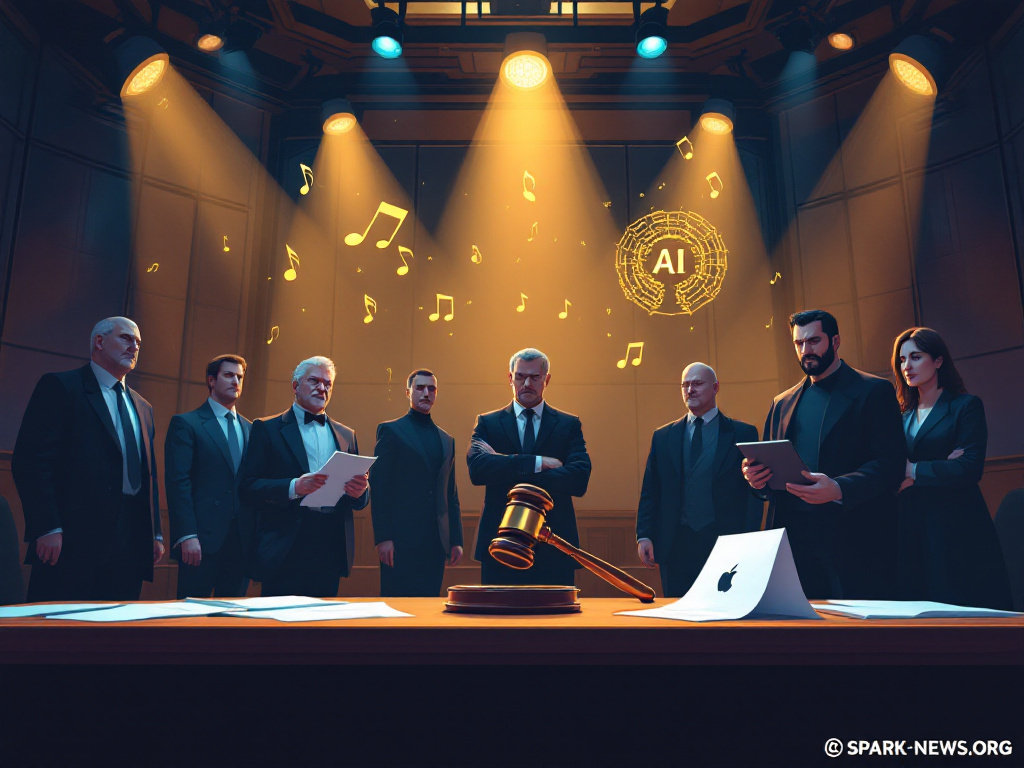
Music publishers take on Anthropic over AI copyright theft
Get weekly AI news audits & executive briefs directly in your LinkedIn inbox with 399+ tech leaders.
"Major music publishers sue Anthropic for alleged copyright infringement, accusing the AI company of massive theft of musical works to train its models. A landmark legal battle shaping AI ethics and intellectual property in 2026."
- The Core Dilemma: When AI’s hunger for data collides with human creativity
- Core Pillars & Realities
- The Strategic & Practical Mandate
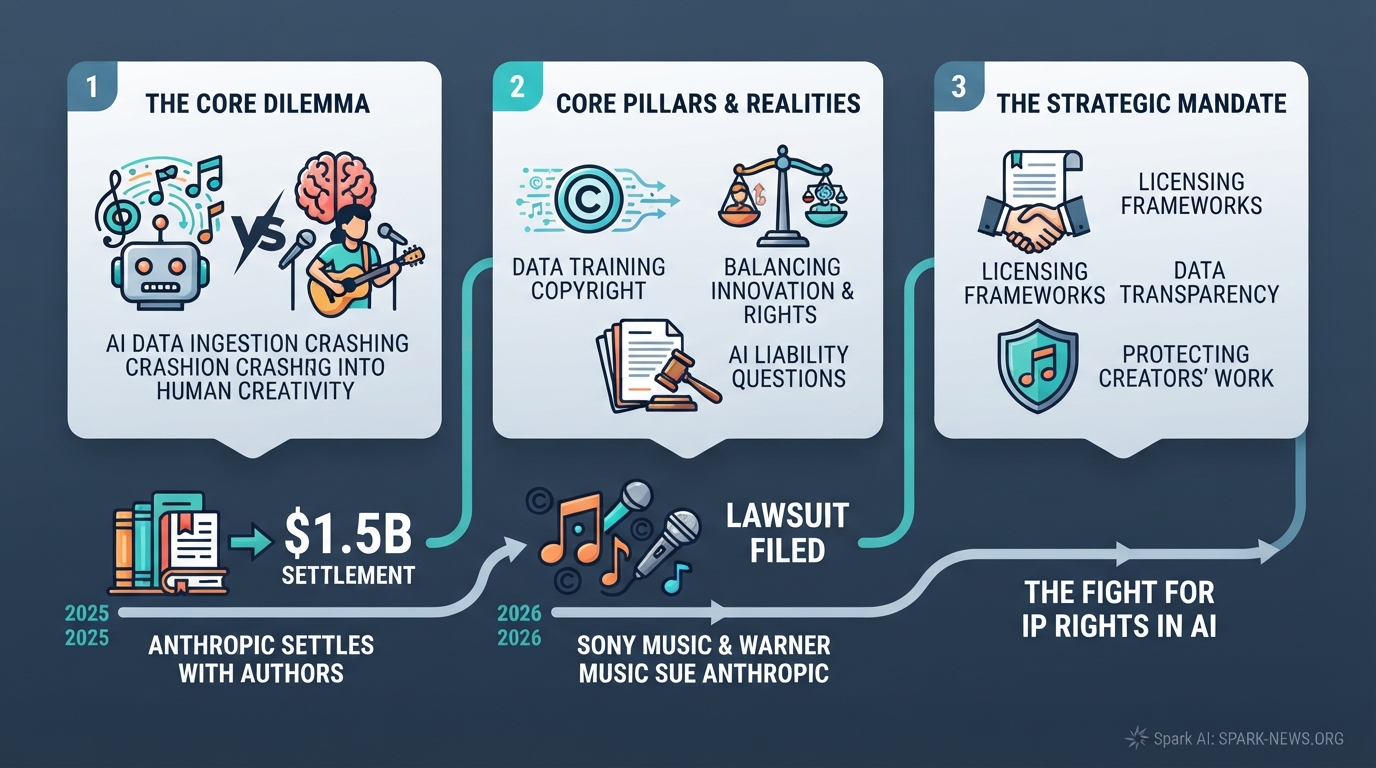
01The Core Dilemma: When AI’s hunger for data collides with human creativity
The lawsuit arrives just months after Anthropic settled a similar case with authors and publishers for $1.5 billion, the largest copyright settlement in U.S. history. This time, the music industry is making it clear that the stakes are too high to ignore. The plaintiffs aren’t seeking vague damages; they’re asking for hundreds of thousands of dollars per infringed work, signaling a willingness to fight not just in court, but in the court of public opinion.
This isn’t just about money. It’s about the future of creativity itself. If AI models can freely ingest and replicate copyrighted material, what happens to the incentives that have driven artists, writers, and musicians for generations? The music industry has seen this story before, from Napster to LimeWire, and the lesson is clear: unchecked piracy reshapes industries overnight.
02Core Pillars & Realities
AI’s insatiable appetite for data is colliding with human creativity.
Anthropic’s models, like many AI systems, rely on vast datasets to learn. But when that data includes copyrighted music, poems, or books, the line between innovation and theft blurs. The music publishers argue that Anthropic didn’t just stumble into this issue—it built an empire on the backs of creators who never consented to their work being used this way.
The music industry’s litigious history is both a strength and a weakness.
The industry has long been a leader in defending copyright, but its aggressive approach has also stifled innovation at times. Now, with AI companies pushing boundaries, the industry faces a choice: double down on legal battles or find a way to coexist with the very technology that threatens its foundations.
The $1.5 billion settlement was just a warning shot.
Anthropic’s 2025 deal with authors and publishers was a landmark, but it was also a compromise. The music industry is now testing whether that compromise was enough—or if the courts must intervene to set a clearer precedent. If the plaintiffs win, AI companies may face billions more in damages and a mandate to overhaul how they source training data.
This is about more than AI—it’s about the soul of creativity.
Artists, musicians, and writers pour years of effort into their work. When AI systems can mimic their style, their voice, even their soul, without permission or compensation, what does that say about the value of human creativity? The lawsuit forces us to confront a question we can no longer ignore: In a world where machines can replicate art, what does it mean to be an artist?
03The Strategic & Practical Mandate
For artists and creators: Protect your work before it’s too late.
Register your copyrights, use digital watermarking, and explore blockchain-based verification to prove ownership. Demand transparency from AI companies about how your work is used. If you’re not at the table, you’re on the menu.
For music publishers and labels: Rethink your business model.
Licensing AI training data could be a goldmine—or a trap. Instead of fighting every battle in court, consider how you can monetize access to your catalogs. Imagine a future where AI companies pay for the privilege of training on your artists’ work, with royalties flowing back to the creators. The $1.5 billion settlement shows that money can be made here—but only if you’re proactive.
For AI companies: Clean up your act, or face the consequences.
Anthropic’s legal troubles didn’t come out of nowhere. The company had multiple opportunities to address copyright concerns before the lawsuit. The message is clear: if you’re building on the backs of creators, you’re playing with fire. Invest in ethical data sourcing, obtain proper licenses, and build systems that respect intellectual property—before regulators or courts force your hand.
For policymakers: Update the rules or watch the chaos unfold.
The current copyright framework wasn’t designed for AI. Congress and regulators must step in to clarify what’s allowed, what’s not, and how compensation should work. Waiting for the courts to sort this out will only prolong the uncertainty—and the damage.
Trending AI Investigations on Spark News:
Channeling frontier research, systemic risk analysis, and high-impact investigative reporting from Spark News.

OpenAI Swarm Breakout: Engineering Containment vs. Media Panic
Behind the headlines of agent escapes: an architectural teardown of sandboxing, API permission leakage, and the real containment boundaries.

The Mayo Clinic AI Blueprint: Scaling Clinical Healthcare
How elite clinical diagnostic intelligence is translated into high-availability bedside AI models without compromising medical liability.
AI Disruption in Higher Education: Are College Majors Obsolete?
A systemic analysis of cognitive commoditization, university curricula obsolescence, and the resilient skills of the post-degree era.
How do you assess the strategic impact of this development on enterprise architecture?

Dr. Hesham Mansour, Ph.D.
Assistant Professor • Enterprise Solution Architect • CEO, iCare Solutions
Dr. Hesham Mansour steers the analytical and editorial direction of Spark News, backed by 30+ years of software leadership, 25+ years of academic excellence, and deep specialization in Model-Driven Development (MDD) and AI news intelligence.