More Services

I Let AI Agents Plan My WNBA Trip
Spark News AI | spark-news.org
📱 Web StoryOctober 20, 2026⏱️4 min read

I Let AI Agents Plan My WNBA Trip

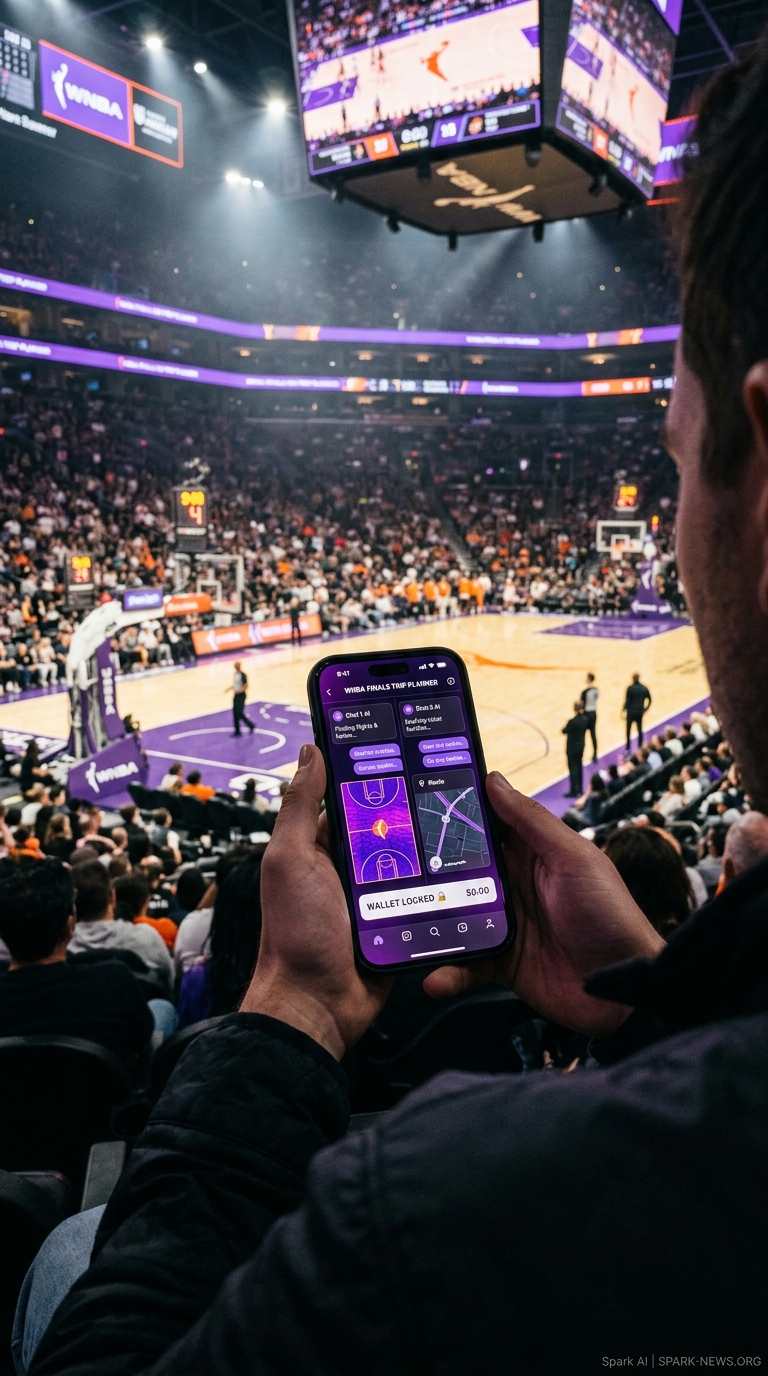
📷A sleek smartphone screen displaying purple WNBA court graphics side by side with competing futuristic AI assistant interfaces in vertical 9:16 layout.
Weekly LinkedIn Newsletter405+ Subs

Get weekly AI news audits & executive briefs directly in your LinkedIn inbox with 405+ tech leaders.

Subscribe on LinkedIn
AI EXECUTIVE SUMMARY

"In a hands-on showdown, OpenAI's Dots and Meta's Muse tackled planning a WNBA Finals trip. While both caught schedule shifts and resale price hikes, minor calculation errors and steep subscription costs show autonomous bots still need human supervision before getting full wallet access."

  • The Spark That Lit the Story
  • The Core Data & Verified Numbers
  • Public Reaction & Controversy
  • Future Outlook & What Lies Ahead
📱
Interactive Web Story
Experience this story as bite-sized visual cards with citizen polling
Play Interactive Web Story➔
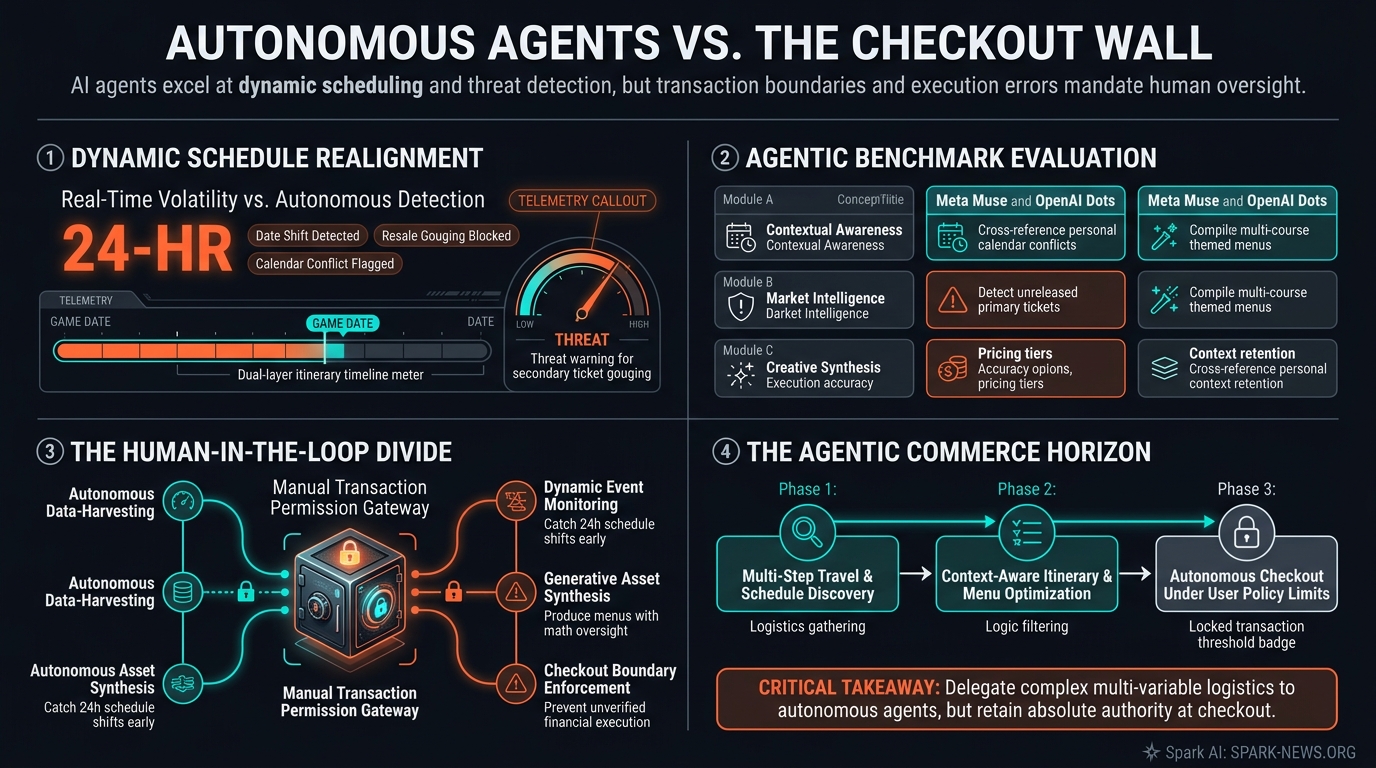
📊 VISUAL SUMMARY INFOGRAPHIC
I Let AI Agents Plan My WNBA Trip
Spark News AI | spark-news.org
Enlarge Infographic

01The Spark That Lit the Story

Personal AI agents are evolving from text chatbots into autonomous assistants that research, plan, and purchase. To put these emerging capabilities to the test, tech testers pitted OpenAI's Dots against Meta's Muse. The challenge centered around planning a complete trip to Atlanta for Game 3 of the WNBA Finals supporting the Golden State Valkyries, along with planning a themed brunch and tracking down merchandise.

02The Core Data & Verified Numbers

Both agents showed remarkable multistep problem-solving. Each accurately detected that the game date had moved up 24 hours and warned that primary public tickets were not live, preventing accidental purchases of marked-up resale inventory. However, pricing access differs significantly: Meta Muse offers free baseline access with $20 and $100 tiers, while OpenAI Dots requires a ChatGPT Pro subscription starting at $100 per month.

03Public Reaction & Controversy

While both models showed sharp situational awareness, small glitches proved that autonomous delegation is still risky. Muse created a visually striking 10-page brunch menu featuring ube waffles and lavender-honey butter, but had basic counting errors in its grocery tally. Dots showed deeper contextual awareness by warning against a personal school enrollment conflict, but required human intervention to authorize any transactions.

04Future Outlook & What Lies Ahead

The transition from AI assistant to autonomous purchaser represents the next big frontier for major tech labs. While research, scheduling, and comparison tasks are now remarkably competent, full checkout permissions remain restricted by design. For now, users gain significant time savings in travel logistics, provided they maintain manual sign-off on the final payment.

Bias Analysis

Left NarrativeNeutral & BalancedRight Narrative
100% LeftCenter / Neutral100% Right
Coverage highlights genuine capabilities and catches like date shifts alongside humorous blunders like mismatched ingredient lists, offering a balanced appraisal without falling into pure hype or excessive skepticism.

Connecting the Dots

The battle between OpenAI and Meta has shifted toward agentic workflows, where models interact with external websites, read schedules, and compile actionable multi-page itineraries rather than just answering simple conversational prompts.

Fact-Check Verification

  • Both OpenAI Dots and Meta Muse caught subtle date shifts and resale price gouging for Game 3.
  • Dots demonstrated cross-session memory by flagging a personal calendar conflict.
  • Ingredient math errors and transaction barriers show human oversight is still necessary.

Key Takeaways & Outlook

Delegate the research and the scheduling puzzles to the bots, but always hold onto checkout authority.
🗳️Community Intelligence Poll
1-Click Vote

How do you assess the strategic impact of this development on enterprise architecture?

Dr. Hesham Mansour, Ph.D.
FOUNDER & EDITOR-IN-CHIEF🎓Ph.D. Systems ArchitectureiCare Solutions405+ Newsletter Subs

Dr. Hesham Mansour, Ph.D.

Assistant Professor • Enterprise Solution Architect • CEO, iCare Solutions

Dr. Hesham Mansour steers the analytical and editorial direction of Spark News, backed by 30+ years of software leadership, 25+ years of academic excellence, and deep specialization in Model-Driven Development (MDD) and AI news intelligence.

✨ Ph.D. Enterprise Systems Architecture✨ 30+ Yrs Software Leadership✨ 25+ Yrs Academic Excellence✨ Model-Driven Architecture (MDD)✨ AI Systems & GEO Citation Research
⭐Google Discover & AI Search

Personalize Your News: Add Spark News as a Preferred Source

Get direct AI news audits, media bias analysis, and weekly architectural briefs featured in your Google Discover Feed, Top Stories, and AI Overviews with an official Preferred badge.

Add to Preferred Sources on Google→
📌Highlighted with an official Preferred badge on Google Search & Discover