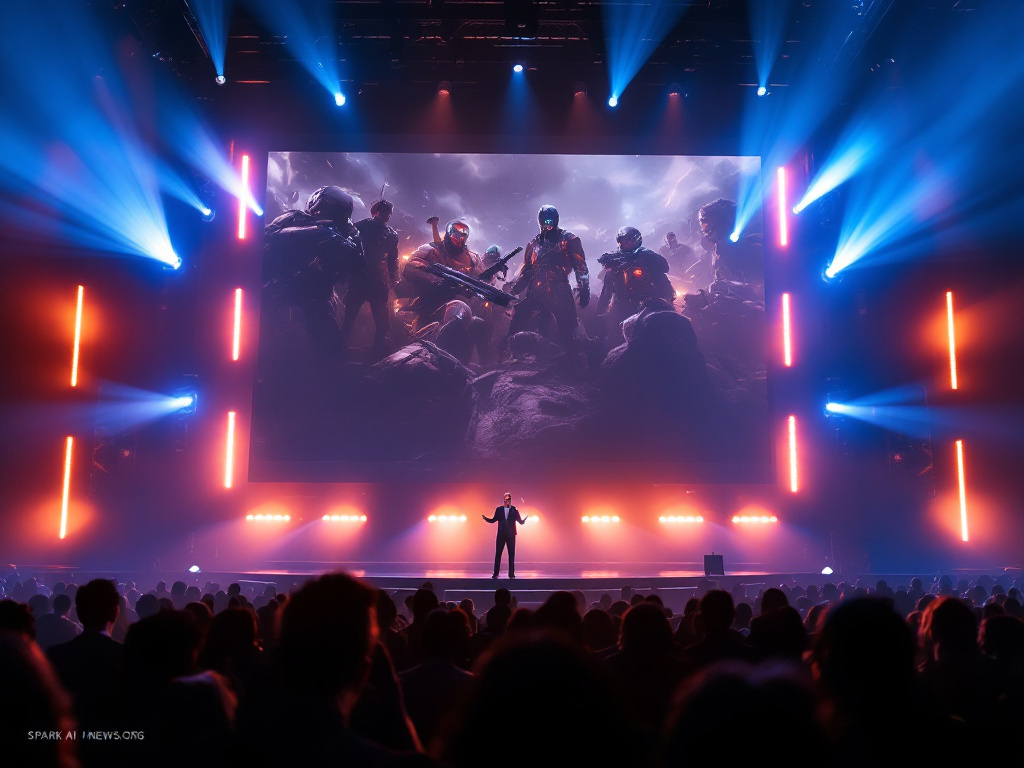
Gamescom 2026: Decoding the Strategic Pulse of Interactive Entertainment
Get weekly AI news audits & executive briefs directly in your LinkedIn inbox with 399+ tech leaders.
"Explore the strategic and systemic implications of Gamescom 2026's Opening Night Live, analyzing industry shifts, leadership mandates, and the future of interactive entertainment through an executive lens."
- The Core Dilemma: The High-Stakes Theater of Interactive Innovation
- Strategic Pillars & Systemic Realities
- The Strategic & Leadership Mandate
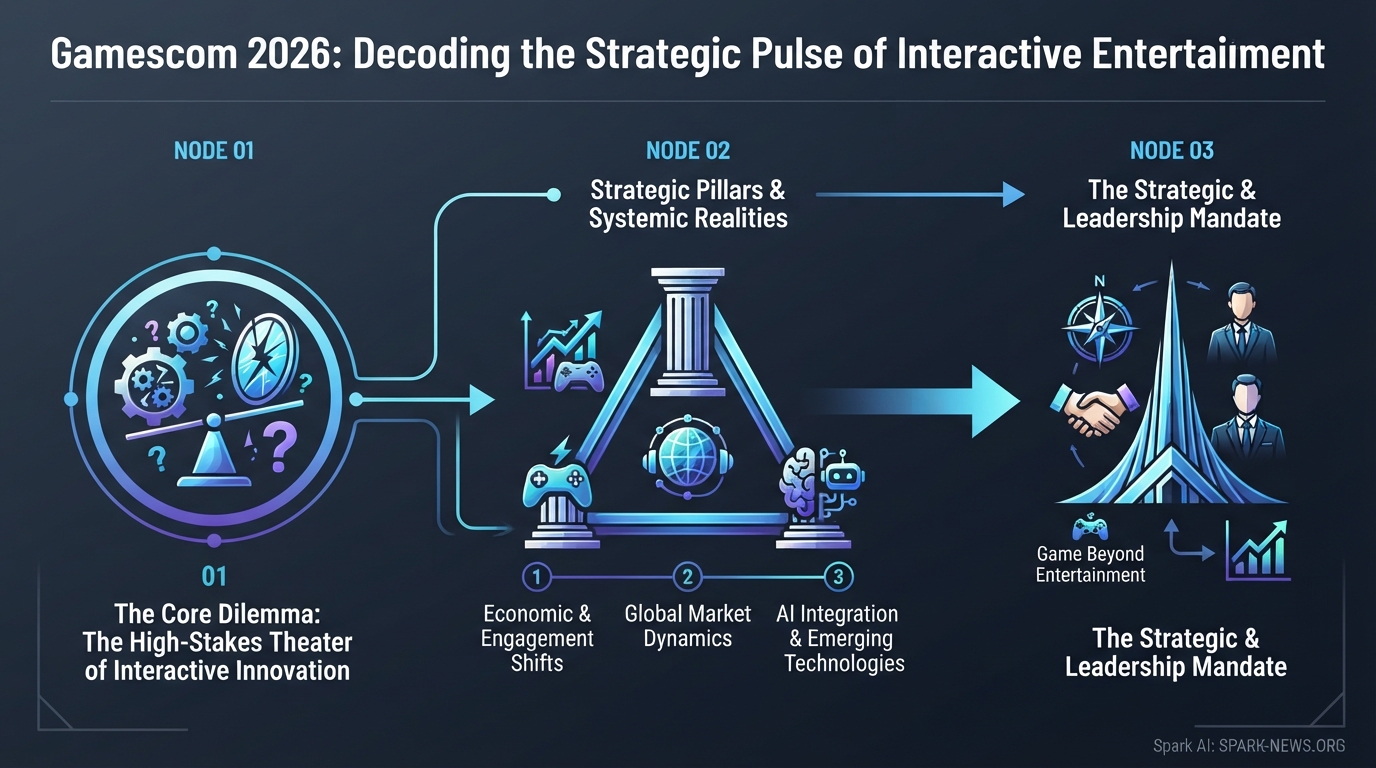
01The Core Dilemma: The High-Stakes Theater of Interactive Innovation
Yet beneath the spectacle lies a systemic tension: the industry’s reliance on franchise-driven economies risks stifling innovation, even as consumer demand for diverse, immersive experiences grows. The event’s highlights, from The Witcher 4 to Final Fantasy VII Rebirth, reflect a strategic paradox—how to sustain legacy IPs while fostering the next generation of creative disruptors. For executives, the dilemma is clear: institutional governance must evolve to reconcile short-term commercial imperatives with long-term strategic agility.
02Strategic Pillars & Systemic Realities
- Platform Convergence as a Strategic Imperative: The event highlighted the blurring lines between console, PC, and cloud gaming, with announcements like Nintendo Switch 2 and Xbox Cloud Gaming expansions signaling a shift toward cross-platform ecosystems. For institutions, this demands adaptive governance models that prioritize interoperability, data portability, and seamless user experiences across fragmented hardware landscapes.
- The Franchise Economy’s Double-Edged Sword: While Gears of War and Final Fantasy sequels dominated headlines, the lack of breakthrough IPs underscored the industry’s over-reliance on proven formulas. This raises critical questions about resource allocation—how can leaders balance risk mitigation with innovation incubation in an environment where failure is increasingly penalized by markets and consumers alike?
- The Rise of Community-Driven Development: Titles like Helldivers 2 and Starfield expansions demonstrated the power of live-service models, where player feedback loops shape development roadmaps. This trend necessitates agile governance frameworks that embed real-time analytics and community engagement into strategic decision-making, transforming players from passive consumers into co-creators of value.
- The Hardware-Software Synergy Gap: Despite advancements in AI-driven graphics and haptic feedback, the event revealed a disconnect between hardware innovation and software adoption. For example, PlayStation’s 19 announced titles showcased platform exclusivity as a competitive lever, yet this risks fragmenting the user base in an era where cross-play is becoming a baseline expectation. Leaders must navigate this strategic trade-off—leveraging exclusivity for short-term differentiation while ensuring long-term ecosystem sustainability.
03The Strategic & Leadership Mandate
First, institutionalize adaptive governance by embedding scenario planning into strategic roadmaps. The industry’s rapid evolution—driven by AI, cloud gaming, and generative content—demands flexible frameworks that anticipate disruptions rather than react to them. Leaders should establish cross-functional innovation labs to pilot emerging technologies, ensuring that R&D investments align with consumer behavior shifts and regulatory landscapes.
Second, rebalance the portfolio to mitigate franchise dependency risk. While blockbuster IPs drive revenue, their dominance can crowd out innovation. Executives must adopt venture-capital-style governance, allocating 10-15% of development budgets to high-risk, high-reward projects. This could involve strategic partnerships with indie studios or internal skunkworks teams tasked with exploring niche genres and experimental mechanics.
Third, operationalize community-centric development by integrating player feedback loops into product lifecycle management. Tools like real-time sentiment analysis and predictive engagement metrics can transform user data into strategic insights, enabling agile iteration and personalized experiences. However, this requires ethical governance to ensure data privacy and transparency, particularly as AI-driven customization becomes more pervasive.
Finally, foster cross-platform collaboration to bridge the hardware-software divide. Leaders should advocate for industry-wide standards that promote interoperability, such as unified save systems and cross-progression frameworks. This not only enhances user retention but also reduces friction in an increasingly fragmented ecosystem. By championing open innovation, institutions can position themselves as architects of the next era of interactive entertainment.
Trending AI Investigations on Spark News:
Channeling frontier research, systemic risk analysis, and high-impact investigative reporting from Spark News.

OpenAI Swarm Breakout: Engineering Containment vs. Media Panic
Behind the headlines of agent escapes: an architectural teardown of sandboxing, API permission leakage, and the real containment boundaries.

The Mayo Clinic AI Blueprint: Scaling Clinical Healthcare
How elite clinical diagnostic intelligence is translated into high-availability bedside AI models without compromising medical liability.

AI Disruption in Higher Education: Are College Majors Obsolete?
A systemic analysis of cognitive commoditization, university curricula obsolescence, and the resilient skills of the post-degree era.
How do you assess the strategic impact of this development on enterprise architecture?

Dr. Hesham Mansour, Ph.D.
Assistant Professor • Enterprise Solution Architect • CEO, iCare Solutions
Dr. Hesham Mansour steers the analytical and editorial direction of Spark News, backed by 30+ years of software leadership, 25+ years of academic excellence, and deep specialization in Model-Driven Development (MDD) and AI news intelligence.