More Services

Tipping Point: How World Cup 2026 Exposes America’s Flawed Gratuity Economy
Spark News AI | spark-news.org
news-analysisJune 21, 2026

Tipping Point: How World Cup 2026 Exposes America’s Flawed Gratuity Economy

AI EXECUTIVE SUMMARY

"Millions of World Cup 2026 visitors face America’s unique tipping culture, with restaurants enforcing automatic gratuities. This report explores the economic, historical, and ethical tensions behind the U.S. tipping system, its impact on workers, and why global fans struggle to adapt. Discover the broader implications for labor rights and tourism."

  • Why Are World Cup Visitors Struggling with America’s Tipping Culture?
  • How Does America’s Tipped Wage System Perpetuate Inequality?
  • What Are the Real-World Consequences for Workers During the World Cup?
  • Could the World Cup Be a Catalyst for Tipping Reform in the U.S.?

01Why Are World Cup Visitors Struggling with America’s Tipping Culture?

The 2026 FIFA World Cup has brought millions of international visitors to U.S. host cities, many of whom are encountering America’s tipping culture for the first time. Unlike in most countries—where service charges are included in bills or tipping is optional—U.S. restaurants often rely on customers to supplement servers’ wages, which can be as low as $2.13 per hour under federal law. This system, rooted in post-slavery labor exploitation, leaves workers vulnerable to income instability. Restaurants like Atlanta’s T’s Brunch Bar have responded by raising automatic gratuities to 20%, but the practice remains alien to visitors from nations where tipping is either nonexistent or minimal. The clash highlights a broader disconnect between U.S. labor norms and global expectations, with servers bearing the brunt of cultural misunderstandings.

02How Does America’s Tipped Wage System Perpetuate Inequality?

The U.S. tipped wage system, which allows employers to pay subminimum wages to workers who earn tips, has long been criticized for exacerbating economic inequality. Research from the Economic Analysis and Research Network shows that poverty rates for tipped workers are significantly lower in states like California and Minnesota, where servers earn the full minimum wage plus tips, compared to states adhering to the federal tipped minimum. Advocacy groups like One Fair Wage argue that the system traces back to post-Civil War efforts to suppress Black workers’ earnings, replacing wages with gratuities to maintain racial and economic hierarchies. The World Cup’s spotlight on this issue has reignited debates about whether temporary service charges—like those imposed during the tournament—can address systemic flaws or merely mask them.

03What Are the Real-World Consequences for Workers During the World Cup?

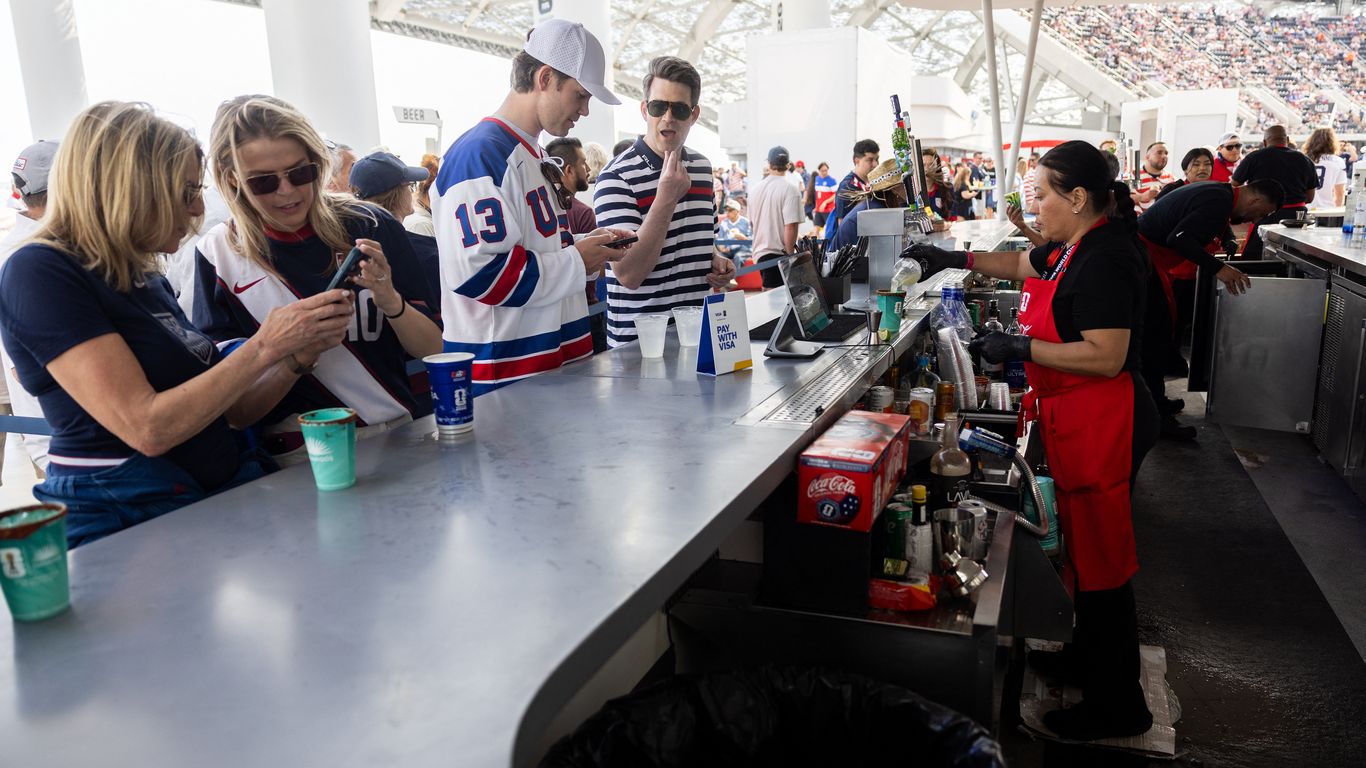
For servers and bartenders, the World Cup has been a double-edged sword. While some restaurants have implemented automatic gratuities to protect workers from foreign visitors unfamiliar with tipping, others struggle to enforce these policies during high-traffic events. NYC bartender Jessica Ordeñana recounted a group of international fans who left a $4 tip on a $300 bill, underscoring the volatility of tipped income. Meanwhile, unionized workers at Los Angeles’ SoFi Stadium threatened to strike over wage disparities, securing a 30% pay increase only after negotiations. These incidents reveal the precarity of tipped work, where earnings fluctuate with tourism seasons, customer generosity, and even geopolitical events. The World Cup’s temporary economic boost may offer short-term relief, but advocates warn it does little to address year-round financial insecurity.

04Could the World Cup Be a Catalyst for Tipping Reform in the U.S.?

The global attention on U.S. tipping practices during the World Cup has amplified calls for reform. Advocates like Saru Jayaraman of One Fair Wage argue that the tournament’s visibility could pressure policymakers to abolish the subminimum tipped wage, following the lead of states like California and Washington. However, resistance from the restaurant industry—citing concerns about higher labor costs and menu prices—remains a significant hurdle. Internationally, the U.S. risks reputational damage as visitors share negative experiences with tipping culture, potentially deterring future tourism. The 2026 World Cup may serve as a turning point, but meaningful change will require confronting the historical and economic roots of the tipping system, not just its symptoms.

Bias Analysis

Left NarrativeLeft-LeaningRight Narrative
100% LeftCenter / Neutral100% Right
media Bias
Coverage of the tipping controversy during the World Cup 2026 reveals distinct media biases. Outlets like Axios frame the issue through a labor rights lens, emphasizing historical context and worker advocacy, while Fox News focuses on the logistical challenges for restaurants and the potential burden on visitors. The former leans progressive, highlighting systemic inequities, whereas the latter adopts a more conservative, business-friendly perspective. Both approaches risk oversimplifying the debate by omitting nuanced solutions, such as hybrid wage models or industry-wide service charge reforms.
political Bias
The discourse around tipping reform is inherently politicized. Progressive groups and labor unions, such as One Fair Wage, advocate for abolishing the tipped minimum wage, aligning with broader movements for income equality. Conversely, conservative and industry-aligned voices argue that higher wages could lead to job losses or increased automation in restaurants. The World Cup’s media coverage often reflects these divides, with left-leaning outlets amplifying worker testimonies and right-leaning sources prioritizing business owner concerns. This polarization obscures potential bipartisan solutions, such as tax incentives for restaurants that adopt living wages.

Connecting the Dots

historical Roots
America’s tipping culture originated in feudal Europe, where aristocrats gave servants additional money as a reward for good service. However, the practice evolved differently in the U.S. after the Civil War, when employers—particularly in the restaurant and railroad industries—used tipping to avoid paying formerly enslaved Black workers fair wages. The federal tipped minimum wage of $2.13 per hour, established in 1966, institutionalized this system, allowing employers to shift the burden of wages onto customers. Today, seven states have eliminated the tipped minimum wage, demonstrating that alternatives exist, but the practice remains entrenched in much of the country.
global Comparison
Unlike the U.S., most countries either include service charges in bills or discourage tipping altogether. In Japan and South Korea, tipping can be considered rude, while in Europe, service charges are typically added automatically. Australia and New Zealand mandate living wages for all workers, eliminating the need for gratuities. The U.S. stands out as an outlier, with its reliance on customer-funded wages creating a precarious economic model for service workers. The World Cup’s influx of global visitors has exposed this cultural divide, sparking conversations about whether the U.S. should align with international norms.

Fact-Check Verification

verified Claims
claim

The federal tipped minimum wage in the U.S. is $2.13 per hour.

verification

Confirmed. The U.S. Department of Labor sets the federal tipped minimum wage at $2.13 per hour, provided tips bring workers’ earnings to at least the federal minimum wage of $7.25 per hour. This policy has not changed as of 2026.

source

U.S. Department of Labor, Fair Labor Standards Act

claim

Poverty rates for tipped workers are lower in states with full minimum wage policies.

verification

Supported by research. Studies from the Economic Analysis and Research Network (EARN) show that poverty rates for tipped workers are significantly lower in states like California, where servers earn the full minimum wage plus tips, compared to states adhering to the federal tipped minimum.

source

Economic Analysis and Research Network (EARN) research cited by Axios

claim

Tipping originated in feudal Europe and was later used to suppress Black workers’ wages in the U.S.

verification

Historically accurate. Tipping began as a feudal practice in Europe and was repurposed in the U.S. post-Civil War to avoid paying fair wages to formerly enslaved Black workers. This claim is supported by labor historians and advocacy groups like One Fair Wage.

source

One Fair Wage, labor history research

claim

Unionized workers at SoFi Stadium secured a 30% pay increase before the World Cup.

verification

Confirmed. Reports from labor unions and local media outlets verify that unionized servers and bartenders at SoFi Stadium negotiated a 30% pay increase after threatening to strike.

source

Union statements, local media coverage

unverified Or Conflicting Claims
claim

Automatic gratuities during the World Cup will lead to long-term tipping reform.

verification

Speculative. While the World Cup has drawn attention to tipping practices, there is no evidence yet that temporary service charges will lead to systemic reform. Advocacy groups argue that permanent policy changes are needed.

source

Lack of concrete policy proposals or legislative action as of 2026

claim

Most international visitors are unaware of U.S. tipping norms.

verification

Anecdotal. While individual reports (e.g., Jessica Ordeñana’s account) suggest some visitors are unfamiliar with tipping, broader data on visitor awareness is lacking. Travel guides and tourism boards have increasingly included tipping advice, but its effectiveness is unclear.

source

Limited survey data; reliance on anecdotal evidence

Key Takeaways & Outlook

The 2026 World Cup has thrust America’s tipping culture into the global spotlight, exposing its economic inequities, historical injustices, and practical challenges for both workers and visitors. While automatic gratuities and temporary wage increases offer short-term solutions, they fail to address the systemic flaws of a system that ties worker livelihoods to customer generosity. The tournament’s legacy may hinge on whether it catalyzes meaningful reform—such as abolishing the tipped minimum wage—or merely reinforces the status quo.

Research Sources