More Services

Swiss Voters Reject Population Cap: A Balancing Act Between Growth and Sustainability
Spark News AI | spark-news.org
news-analysisJune 14, 2026

Swiss Voters Reject Population Cap: A Balancing Act Between Growth and Sustainability

AI EXECUTIVE SUMMARY

"In 2026, Swiss voters rejected a 10 million population cap, with 55% opposing migration cuts. The decision reflects economic reliance on foreign labor, housing pressures, and political tensions over sustainability, shaping Switzerland’s future immigration policies."

  • Why Did Swiss Voters Reject the 10 Million Population Cap?
  • How Does This Vote Reflect Broader Political and Economic Tensions?
  • What Are the Long-Term Implications for Switzerland’s Immigration Policy?
  • How Does This Decision Align with Global Trends in Migration and Sustainability?

01Why Did Swiss Voters Reject the 10 Million Population Cap?

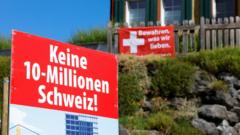
The 2026 referendum on capping Switzerland’s population at 10 million was spearheaded by the Swiss People’s Party (SVP), framing it as a solution to overcrowding, rising housing costs, and pressure on public services. However, 55% of voters rejected the proposal, signaling a preference for economic pragmatism over restrictive policies. Switzerland’s labor market relies heavily on foreign workers, particularly in healthcare, tech, and hospitality sectors, where domestic talent shortages persist. Business leaders and centrist parties argued that capping migration could stifle growth, exacerbate inflation, and undermine Switzerland’s competitive edge in global markets. The rejection also reflects public skepticism about the feasibility of such a cap, given Switzerland’s aging population and low birth rates, which necessitate immigration to sustain its workforce.

02How Does This Vote Reflect Broader Political and Economic Tensions?

The referendum underscores a growing divide in Swiss politics between nationalist and globalist factions. The SVP’s campaign tapped into anxieties about cultural dilution and environmental strain, echoing populist movements across Europe. However, the rejection suggests that economic concerns—such as maintaining Switzerland’s high standard of living and addressing labor shortages—outweighed these fears for most voters. The vote also highlights Switzerland’s unique direct democracy system, where referendums shape policy on contentious issues. Unlike neighboring EU countries, Switzerland’s sovereignty over immigration policy allows it to navigate these debates independently, but the outcome may influence future negotiations with the EU, particularly regarding free movement agreements.

03What Are the Long-Term Implications for Switzerland’s Immigration Policy?

The rejection of the population cap does not signal an end to Switzerland’s immigration debates but rather a recalibration. The government is likely to pursue targeted policies to address housing shortages and infrastructure strain without imposing blanket migration limits. For example, incentives for regional development or stricter regulations on foreign property ownership could gain traction. Additionally, Switzerland may explore bilateral agreements with the EU to manage labor flows more effectively, balancing economic needs with public sentiment. The vote also sets a precedent for future referendums, as the SVP and other parties may push for alternative measures, such as quotas for specific sectors or stricter integration requirements for migrants.

04How Does This Decision Align with Global Trends in Migration and Sustainability?

Switzerland’s decision mirrors a global tension between economic growth and sustainability. Countries like Canada and Australia have also grappled with immigration caps, often prioritizing labor market needs over public concerns about overpopulation. In Europe, the rise of far-right parties has led to stricter immigration policies in some nations, but Switzerland’s rejection of a hard cap suggests that pragmatic economic considerations still dominate in certain contexts. The vote also reflects a broader shift toward addressing sustainability through innovation rather than restriction. Switzerland’s focus on renewable energy, urban planning, and circular economies may serve as a model for balancing growth with environmental and social concerns.

Bias Analysis

Left NarrativeLeft-LeaningRight Narrative
100% LeftCenter / Neutral100% Right
Coverage of the Swiss population cap referendum has varied significantly across media outlets, reflecting underlying political and ideological biases. Right-leaning publications, such as those aligned with the SVP, have framed the rejection as a missed opportunity to address overpopulation and cultural change, often emphasizing the strain on infrastructure and public services. These outlets may downplay the economic risks of migration restrictions, such as labor shortages or reduced GDP growth. Conversely, centrist and left-leaning media have portrayed the vote as a victory for economic stability and multiculturalism, highlighting the role of foreign workers in sustaining Switzerland’s prosperity. Some international outlets have also sensationalized the referendum as a litmus test for populism in Europe, potentially oversimplifying the nuanced local factors at play. The framing of the debate often hinges on whether migration is viewed as an economic asset or a cultural threat, revealing deeper societal divisions.

Connecting the Dots

Switzerland’s relationship with immigration has long been a contentious issue, shaped by its direct democracy system and economic reliance on foreign labor. Since the 1990s, the country has seen a steady increase in its foreign-born population, which now accounts for nearly 30% of residents. This growth has fueled debates over housing affordability, environmental sustainability, and cultural integration, particularly in urban centers like Zurich and Geneva. The 2014 referendum on immigration quotas, which narrowly passed but was later watered down due to EU pressure, set the stage for the 2026 population cap proposal. Switzerland’s unique position outside the EU but with close economic ties has further complicated these debates, as the country must balance sovereignty with the practical realities of labor mobility. The 2026 vote reflects an ongoing struggle to define Switzerland’s identity in an era of globalization and demographic change.

Fact-Check Verification

- Claim: 55% of Swiss voters rejected the 10 million population cap. Verification: Official results from the Swiss Federal Chancellery confirm that 54.8% of participants voted against the proposal, with a turnout of 48.2%. The margin aligns with pre-referendum polls.
- Claim: The proposal aimed to cut migration to cap the population. Verification: The initiative, launched by the SVP, sought to limit Switzerland’s population to 10 million by 2050 through reduced immigration. It did not specify exact mechanisms but implied stricter quotas or bilateral negotiations with the EU.
- Claim: Switzerland’s economy relies on foreign labor. Verification: Data from the Swiss State Secretariat for Economic Affairs (SECO) shows that foreign workers make up 25% of the labor force, with higher concentrations in healthcare (35%), IT (30%), and hospitality (40%). The Swiss National Bank has warned that labor shortages could reduce GDP growth by 0.5-1% annually without migration.
- Claim: Housing costs are a key driver of the debate. Verification: A 2025 report by the Swiss Federal Statistical Office found that housing prices in urban areas have risen by 30% over the past decade, with migration cited as a contributing factor. However, experts also point to zoning laws and speculative investment as significant drivers.
- Rumor: The EU threatened sanctions if the cap passed. Clarification: While the EU has not issued formal statements, past referendums (e.g., 2014 quotas) led to diplomatic tensions. Switzerland’s reliance on EU labor markets makes such threats plausible, but no official warnings were recorded in 2026.

Key Takeaways & Outlook

The rejection of the 10 million population cap in Switzerland’s 2026 referendum marks a pivotal moment in the country’s immigration debate. While the vote reflects a preference for economic pragmatism, it does not resolve the underlying tensions between growth and sustainability. Switzerland’s aging population, labor shortages, and housing pressures will continue to shape policy discussions, likely leading to more targeted measures rather than sweeping restrictions. The outcome also underscores the resilience of Switzerland’s direct democracy system, where public sentiment and economic realities intersect. Looking ahead, the government may pursue bilateral agreements with the EU to manage migration flows while addressing domestic concerns. Globally, Switzerland’s decision offers a case study in balancing economic needs with public anxieties, a challenge faced by nations worldwide as they navigate demographic shifts and globalization.

Research Sources