Spark News AI | spark-news.org
executive-briefSeptember 17, 2026⏱️7 min read
Who Pays for the Power Behind the Machine?
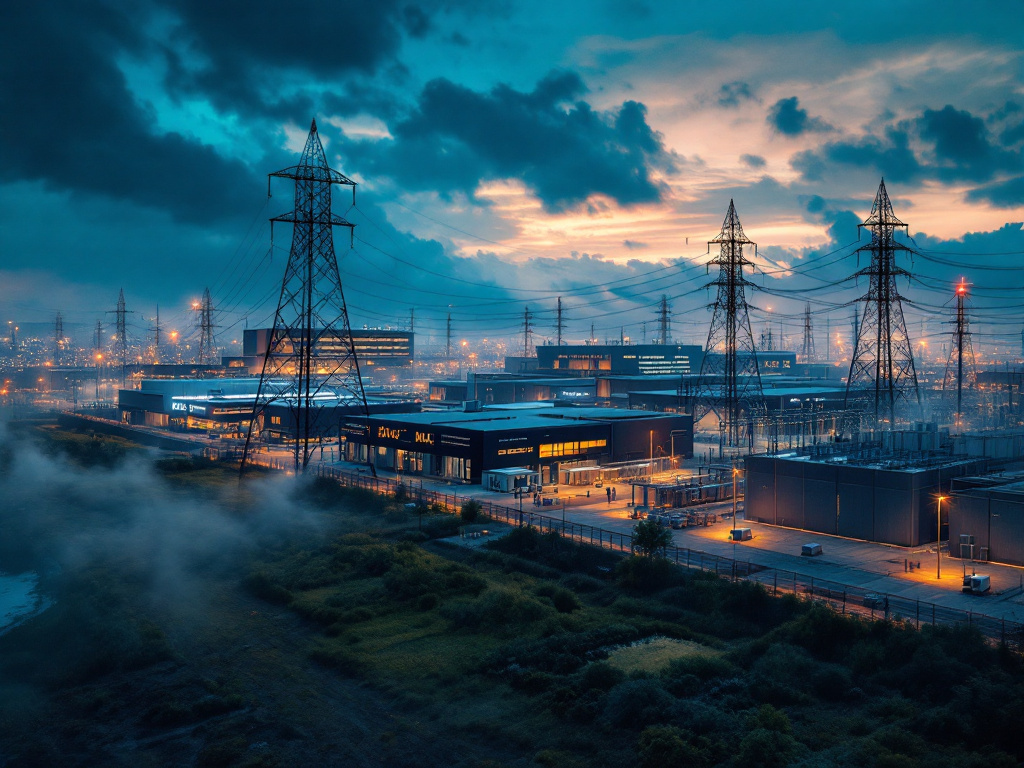
📷A vast modern data center campus sits adjacent to a regional electrical substation, illustrating the growing friction between expanding compute capacity and local utility grids.
Weekly LinkedIn NewsletterEdition #5
Featured in the weekly "Spark News: AI Media Brief" newsletter series on LinkedIn.
🎓Executive Brief | Dr. Hesham Mansour, Ph.D.
AI EXECUTIVE PERSPECTIVE & SUMMARY
"The U.S. House passed the Ratepayer Protection Act in a 417-3 vote, requiring state utility regulators to ensure AI data centers contribute to new power generation costs instead of burdening residential consumers."
- The Core Dilemma: The Hidden Electric Bill of Innovation
- Core Pillars & Realities
- The Strategic & Practical Mandate
📊 VISUAL SUMMARY INFOGRAPHIC
Spark News AI | spark-news.org
Enlarge Infographic
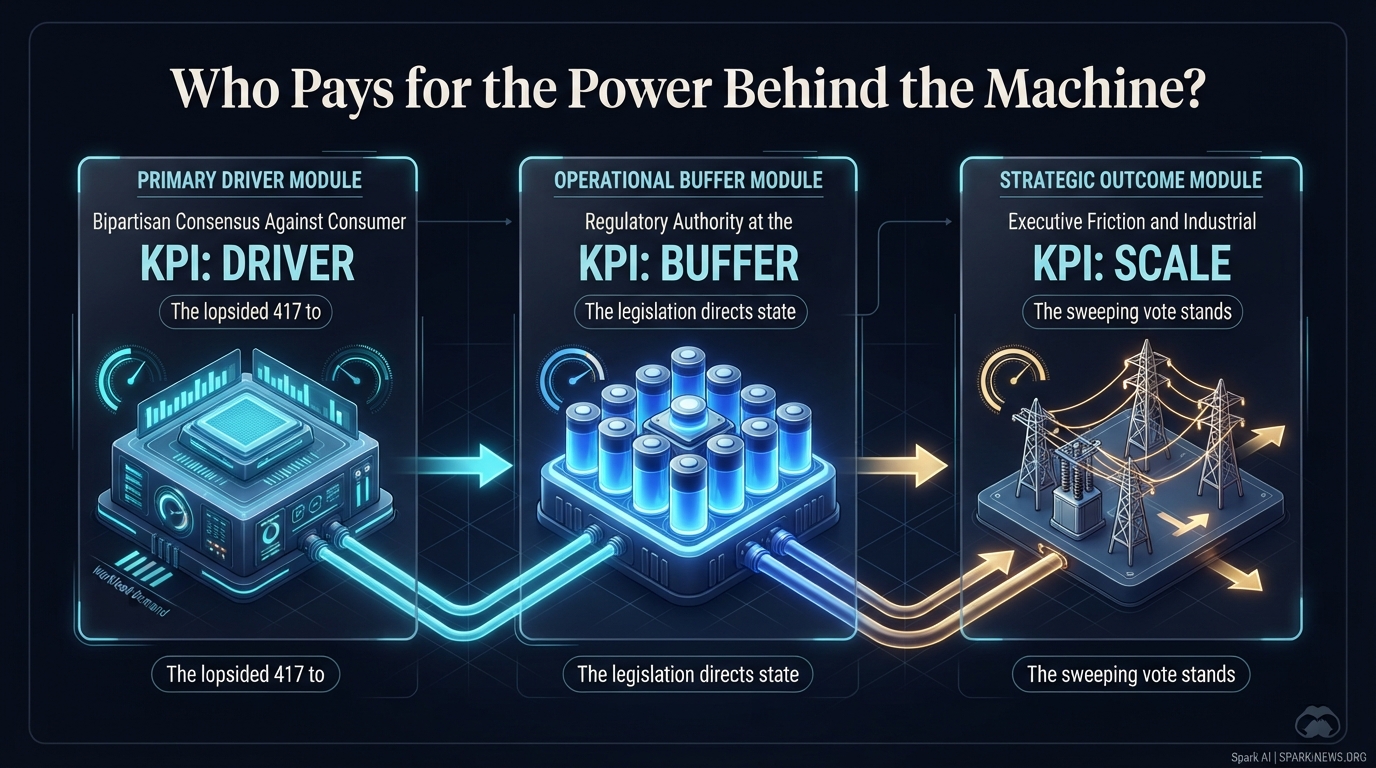
📊A clear flow breakdown demonstrating how the Ratepayer Protection Act shifts the cost burden of new electrical generation from everyday households directly to high-density compute facilities.
Share Chart on LinkedIn01The Core Dilemma: The Hidden Electric Bill of Innovation
Every major technological leap carries an invisible ledger. For artificial intelligence, that ledger is written in gigawatts and gallons of cooling water. As hyperscale facilities spread across communities, residential consumers are discovering that running advanced digital models requires massive physical upgrades to regional power grids. When a single facility consumes as much power as a small city, the question of who pays for new substations and transmission lines ceases to be an accounting detail. It becomes a matter of basic fairness.
On Wednesday, the U.S. House delivered an unmistakable answer by passing the Ratepayer Protection Act in an overwhelming 417 to 3 vote. Sponsored by Representatives Gabe Evans and Kathy Castor, the measure requires state utility commissions to ensure that high-density facilities fund the generation capacity they require. Public pushback has reached a boiling point, with roughly 70 percent of Americans opposing local data center construction due to soaring power bills and strained municipal resources. Washington has recognized that technical progress loses public legitimacy the moment it arrives as an uninvited rate hike on a household electricity statement.
On Wednesday, the U.S. House delivered an unmistakable answer by passing the Ratepayer Protection Act in an overwhelming 417 to 3 vote. Sponsored by Representatives Gabe Evans and Kathy Castor, the measure requires state utility commissions to ensure that high-density facilities fund the generation capacity they require. Public pushback has reached a boiling point, with roughly 70 percent of Americans opposing local data center construction due to soaring power bills and strained municipal resources. Washington has recognized that technical progress loses public legitimacy the moment it arrives as an uninvited rate hike on a household electricity statement.
02Core Pillars & Realities
Addressing this challenge requires looking at the entire energy ecosystem rather than treating tech growth and utility management as separate domains.
* Bipartisan Consensus Against Consumer Cost-Shifting: The lopsided 417 to 3 tally demonstrates rare political unity. Lawmakers from both sides recognized that allowing utilities to socialize infrastructure expenses across regular households while privatizing the commercial gains of computing creates an unsustainable political backlash ahead of midterm elections.
* Regulatory Authority at the State Level: The legislation directs state utility commissions to establish explicit rules requiring facility operators to shoulder generation investments. This empowers local regulators to match capacity expansion with actual capital contributions from tech operators.
* Executive Friction and Industrial Realpolitik: The sweeping vote stands in contrast to the White House posture, where President Trump has argued against guardrails that might slow compute expansion relative to global competitors. The House response highlights that domestic stability and grid resilience cannot be sacrificed for unrestricted buildouts.
* Community Resource Pressures: Opposition goes beyond electricity rates. Water consumption for cooling systems and localized land-use conflicts have turned data centers from economic trophies into civic flashpoints, forcing operators to reconsider site selection and self-generation options.
* Bipartisan Consensus Against Consumer Cost-Shifting: The lopsided 417 to 3 tally demonstrates rare political unity. Lawmakers from both sides recognized that allowing utilities to socialize infrastructure expenses across regular households while privatizing the commercial gains of computing creates an unsustainable political backlash ahead of midterm elections.
* Regulatory Authority at the State Level: The legislation directs state utility commissions to establish explicit rules requiring facility operators to shoulder generation investments. This empowers local regulators to match capacity expansion with actual capital contributions from tech operators.
* Executive Friction and Industrial Realpolitik: The sweeping vote stands in contrast to the White House posture, where President Trump has argued against guardrails that might slow compute expansion relative to global competitors. The House response highlights that domestic stability and grid resilience cannot be sacrificed for unrestricted buildouts.
* Community Resource Pressures: Opposition goes beyond electricity rates. Water consumption for cooling systems and localized land-use conflicts have turned data centers from economic trophies into civic flashpoints, forcing operators to reconsider site selection and self-generation options.
03The Strategic & Practical Mandate
For enterprise architects, utility directors, and policymakers, this legislative shift signals a structural change in how digital infrastructure must be planned and funded.
First, technology organizations must integrate dedicated energy strategies directly into their architectural blueprints. Relying on municipal grids without direct power purchase agreements or co-located generation assets is no longer a viable operating model. Capital allocation must account for dedicated power delivery from day one.
Second, public utility commissions need to modernize rate structures. Regulators should establish transparent tariff classes for high-density compute loads, ensuring that baseline residential and small-business rates remain insulated from speculative industrial expansion.
Finally, municipal leaders must demand transparency before approving permits. Hosting compute capacity should deliver verifiable community value, whether through advanced local tax revenues, microgrid investments, or closed-loop cooling systems that safeguard municipal water supplies.
First, technology organizations must integrate dedicated energy strategies directly into their architectural blueprints. Relying on municipal grids without direct power purchase agreements or co-located generation assets is no longer a viable operating model. Capital allocation must account for dedicated power delivery from day one.
Second, public utility commissions need to modernize rate structures. Regulators should establish transparent tariff classes for high-density compute loads, ensuring that baseline residential and small-business rates remain insulated from speculative industrial expansion.
Finally, municipal leaders must demand transparency before approving permits. Hosting compute capacity should deliver verifiable community value, whether through advanced local tax revenues, microgrid investments, or closed-loop cooling systems that safeguard municipal water supplies.
🔮Forward Outlook & Discussion
The path forward is not about stalling progress, but about building it on an honest balance sheet. When industrial consumers pay their own freight, engineering incentives align toward genuine efficiency and cleaner, dedicated power generation. Can the technology sector embrace on-site generation quickly enough to sustain compute expansion without breaking community trust?
🗳️Community Intelligence Poll
1-Click VoteHow do you assess the strategic impact of this development on enterprise architecture?

FOUNDER & EDITOR-IN-CHIEFiCare Solutions374+ Newsletter Subs
Dr. Hesham Mansour
Assistant Professor • Enterprise Solution Architect • CEO, iCare Solutions
Dr. Hesham Mansour steers the analytical and editorial direction of Spark News, backed by 30+ years of software leadership, 25+ years of academic excellence, and deep specialization in Model-Driven Development (MDD) and AI news intelligence.
✨ 30+ Yrs Software Leadership✨ 25+ Yrs Academic Excellence✨ Model-Driven Dev (MDD)✨ AI News & Trend Intelligence